



What's Happening?
Chinese semiconductor companies have reported unprecedented revenue growth, driven by a surge in demand for artificial intelligence (AI) technologies and the impact of U.S. export restrictions. These restrictions have prompted China to accelerate its
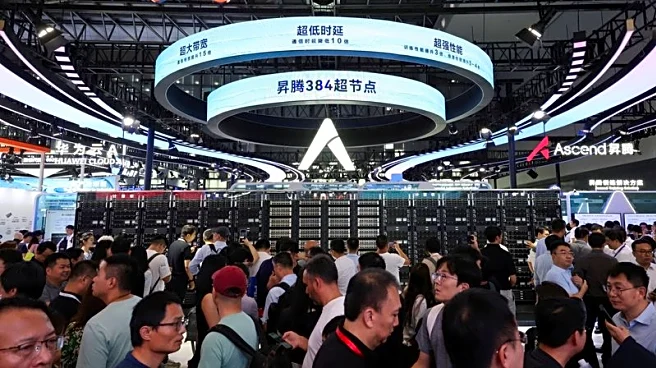
efforts towards self-sufficiency in the tech sector. Major players like Semiconductor Manufacturing International Co. (SMIC) and Hua Hong have seen significant revenue increases, with SMIC reporting a 16% rise to $9.3 billion in 2025. The demand for AI infrastructure and electric vehicles has fueled this growth, despite the technological gap between Chinese and U.S. chip performance. Companies like Huawei are stepping in to provide domestic alternatives, even as their products lag behind U.S. counterparts.
Why It's Important?
The record revenue for Chinese chip firms highlights the shifting dynamics in the global semiconductor industry, particularly as geopolitical tensions influence market strategies. The U.S. export restrictions have inadvertently boosted China's domestic tech industry, encouraging local innovation and production. This development could lead to a more self-reliant Chinese tech sector, potentially reducing its dependency on U.S. technology. The increased focus on AI and electric vehicles also underscores the growing importance of these sectors in the global economy. As China continues to develop its semiconductor capabilities, it could alter the competitive landscape, impacting global supply chains and market shares.
What's Next?
Looking ahead, Chinese chip firms are expected to continue their growth trajectory, with further revenue increases anticipated. The ongoing U.S. export restrictions may lead to more aggressive efforts by China to enhance its technological capabilities. This could involve increased investment in research and development, as well as strategic partnerships to bolster domestic production. The global semiconductor market may see further shifts as other countries respond to China's growing influence. Additionally, the technological advancements made by Chinese firms could eventually close the performance gap with U.S. counterparts, potentially leading to increased competition in the global market.
Beyond the Headlines
The rise of Chinese semiconductor firms also raises questions about the long-term implications for global tech leadership and innovation. As China invests in developing its semiconductor industry, it may influence global standards and practices. This shift could have cultural and economic impacts, as countries navigate the balance between collaboration and competition in the tech sector. Furthermore, the focus on AI and electric vehicles aligns with broader trends towards digital transformation and sustainability, which could drive further innovation and policy changes worldwide.