
What's Happening?
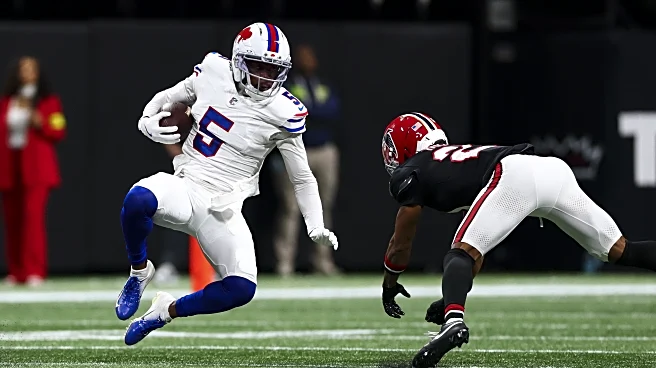
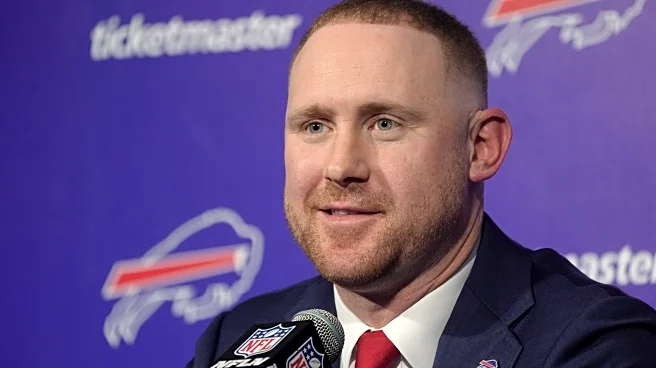
Buffalo Bills General Manager Brandon Beane is under scrutiny following claims by team owner Terry Pegula regarding the 2024 draft pick of wide receiver Keon Coleman. Pegula suggested that Beane only agreed to draft Coleman due to the coaching staff's preference. However, a video released by the Bills contradicts this claim, showing Beane's enthusiasm for Coleman. During the 2024 Scouting Combine, Beane expressed admiration for Coleman's intelligence and character, dismissing concerns about his slower-than-expected 40-yard dash time. Beane believed this would lower Coleman's draft stock, increasing the Bills' chances of acquiring him. Ultimately, the Bills selected Coleman with the first pick on the second day of the draft, a decision Beane stood
by unless an extraordinary trade offer was presented.
Why It's Important?
The controversy surrounding the draft decision highlights the complexities and pressures faced by NFL management in player selection. Beane's decision to draft Coleman, despite his slower 40-yard dash, underscores the importance of evaluating a player's overall potential beyond initial metrics. This situation also reflects the internal dynamics and decision-making processes within NFL teams, where management and coaching staff may have differing opinions. The scrutiny on Beane could impact his reputation and decision-making authority within the organization, especially if Coleman's performance does not meet expectations. This case serves as a reminder of the high stakes involved in draft decisions and their long-term implications for team success.
What's Next?
As the Bills continue to evaluate Coleman's performance, the team may face pressure to justify the draft decision if Coleman does not deliver expected results. Beane's future decisions will likely be closely monitored, and any further missteps could lead to changes in the team's management structure. Additionally, the situation may prompt the Bills to reassess their draft strategy and decision-making processes to ensure alignment between management and coaching staff. The outcome of this controversy could influence how other NFL teams approach similar situations, potentially leading to more transparent and collaborative decision-making practices.