


What's Happening?
The International Fine Prints and Drawings Association's (IFPDA) annual Print Fair in New York is showcasing a new catalogue raisonné dedicated to Kenneth E. Tyler, a renowned master printer. The National Gallery of Australia (NGA) is presenting this
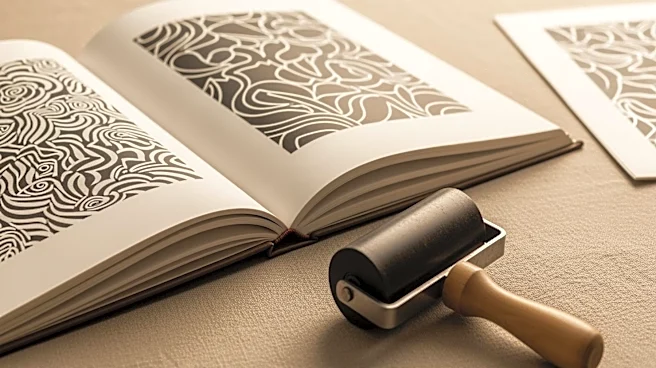
three-volume publication, which documents Tyler's extensive work from 1986 to 2001. Tyler, who emerged as a printmaker in the 1960s, revolutionized the medium by founding workshops that produced high-quality limited-edition prints. His collaborations with artists like Robert Rauschenberg and Jasper Johns helped elevate printmaking as an art form. The catalogue highlights Tyler's innovative techniques and the collaborative nature of his workshops, which were known for developing new presses and methods. The NGA holds the largest collection of Tyler's work, and the publication serves as a testament to his influence in the art world.
Why It's Important?
Kenneth Tyler's contributions to printmaking have had a lasting impact on the art industry, transforming it from a reproductive medium to a respected art form. The catalogue raisonné not only celebrates Tyler's legacy but also provides valuable insights into the evolution of printmaking techniques. By documenting the collaborative processes and innovations of Tyler's workshops, the publication serves as an educational resource for artists and scholars. The recognition at the IFPDA Print Fair underscores the importance of preserving and studying the history of printmaking, which continues to influence contemporary art practices. Tyler's work has paved the way for future generations of printmakers, highlighting the significance of technical innovation and artistic collaboration.
What's Next?
The NGA is hosting an exhibition titled 'Proofs and Processes: The Kenneth Tyler Collection' to further celebrate Tyler's legacy. Additionally, a conversation featuring artist Donald Sultan and NGA curator Warwick Heywood will explore Tyler's impact on the art world. These events aim to engage the public and art community in discussions about the importance of printmaking and Tyler's contributions. The catalogue raisonné is expected to inspire new research and interest in the field, potentially leading to further exhibitions and publications that explore the history and future of printmaking.