

What's Happening?
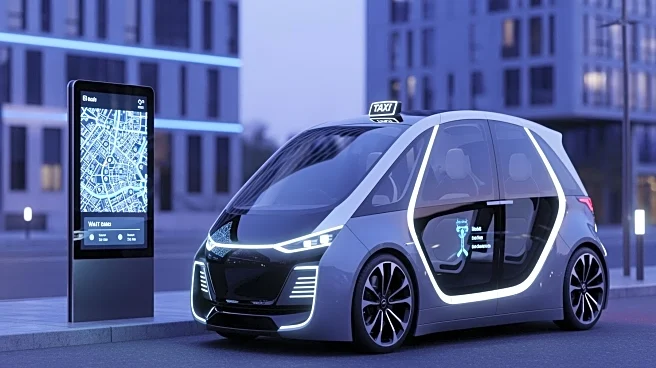
A recent evaluation of Tesla's Robotaxi service in San Francisco reveals that while the service offers competitive pricing compared to Waymo, Uber, and Lyft, it suffers from longer wait times. Over a four-day period, a Tesla enthusiast attempted to use
the Robotaxi service ten times, finding that wait times were often longer than those for Uber and Lyft. On two occasions, the service was unavailable due to high demand, and on one occasion, the user opted for a quicker Uber ride instead. Despite these challenges, the user found the ride quality to be smooth and comparable to other services, with only minor safety driver interventions. The pricing for Tesla's Robotaxi was generally lower than Waymo's, which is speculated to be due to the absence of a human driver in Waymo's service.
Why It's Important?
The trial of Tesla's Robotaxi service in San Francisco is significant as it highlights the challenges and opportunities in the autonomous vehicle market. The longer wait times suggest that Tesla may need to increase its fleet to meet demand, which could impact its operational strategy and cost structure. The competitive pricing could attract more users, potentially disrupting the ride-hailing market dominated by Uber and Lyft. The presence of safety drivers indicates that Tesla is still in the testing phase, and the removal of these drivers could significantly reduce operational costs and improve service efficiency. This development is crucial for Tesla's long-term strategy to establish a fully autonomous ride-hailing service, which could have broader implications for urban transportation and traffic management.
What's Next?
Tesla is expected to continue refining its Robotaxi service, with potential updates to its Full Self-Driving software that could address current limitations. The company may also seek regulatory approval to operate without safety drivers, which would mark a significant milestone in its autonomous vehicle ambitions. As Tesla gathers more data from its trials, it could expand the service to other cities, increasing its market presence. Stakeholders, including city planners and regulators, will likely monitor these developments closely, as the widespread adoption of autonomous vehicles could necessitate changes in infrastructure and policy.