



What's Happening?
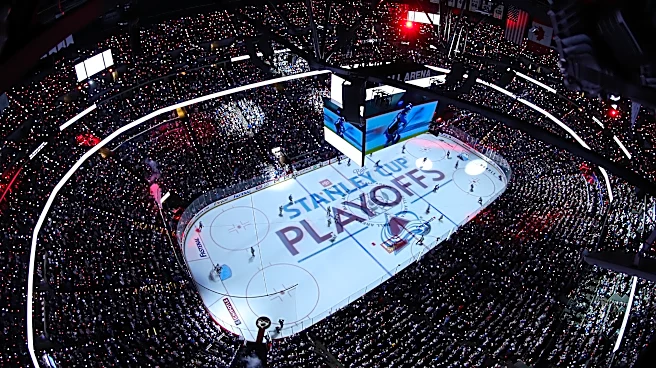
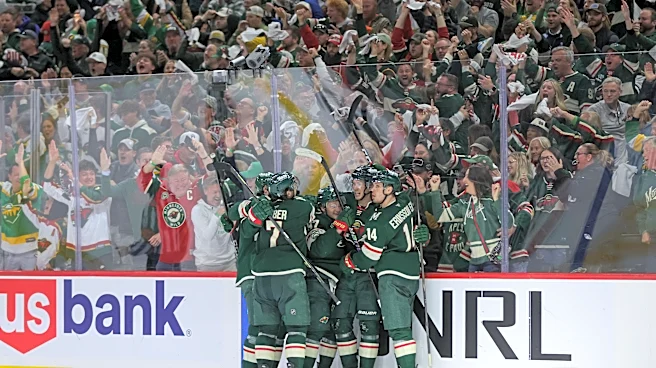
The Minnesota Wild have advanced to the second round of the 2026 Stanley Cup Playoffs after defeating the Dallas Stars in six games. This marks the first time since 2015 that the Wild have progressed beyond the first round. Their next challenge is against
the Colorado Avalanche, the Presidents' Trophy winners, known for their high-scoring capabilities. The series opener is scheduled for Sunday night in Denver. Historically, the Wild and Avalanche have met in the playoffs three times, with the lower-seeded team winning each series. The Wild, led by Kirill Kaprizov and Quinn Hughes, face a formidable Avalanche team featuring Nathan MacKinnon and Martin Necas. Both teams are dealing with injuries, with key players like Minnesota's Jonas Brodin and Colorado's Josh Manson affected.
Why It's Important?
This playoff series is significant as it highlights the competitive nature of the NHL's Western Conference. The Minnesota Wild's advancement past the first round for the first time in over a decade signals a potential shift in their postseason fortunes. Facing the Colorado Avalanche, a team with a strong regular-season record, presents a major test for the Wild. The outcome of this series could impact team strategies and player performances in future seasons. For the Avalanche, maintaining their momentum after a first-round sweep is crucial to their championship aspirations. The series also showcases the depth and talent within both teams, potentially influencing player trades and team compositions in the off-season.
What's Next?
The series between the Wild and Avalanche is expected to be highly competitive, with both teams having strong offensive and defensive capabilities. The outcome of Game 1 could set the tone for the rest of the series. Key players' performances, such as those of Nathan MacKinnon and Kirill Kaprizov, will be closely watched. Injuries to players like Jonas Brodin and Josh Manson may affect team dynamics and strategies. The series could also influence future playoff matchups and seedings, as well as player contracts and team management decisions.