


What's Happening?
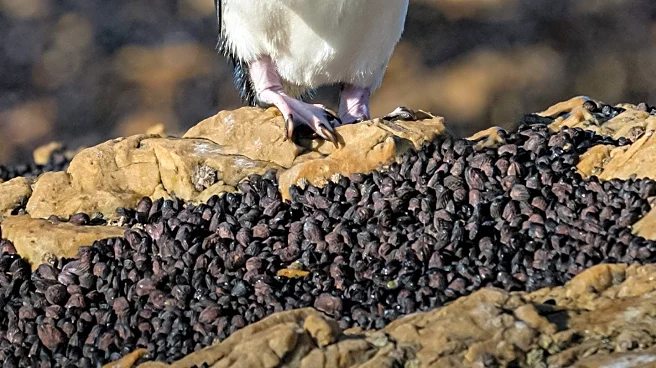
At Edinburgh Zoo, Gentoo penguins are engaging in their annual courtship rituals with the help of creatively painted pebbles provided by children from the Royal Hospital for Children and Young People in Edinburgh. This initiative, led by the Royal Zoological
Society of Scotland, involves patients painting pebbles with various designs, which are then used by the penguins to build nests and attract mates. The event, which has been ongoing since 2022, allows children to connect with nature and contribute to the penguins' breeding season. The painted pebbles, featuring designs like flowers, rainbows, and even logos, are eagerly selected by the penguins, who use them to construct nests that are crucial for egg incubation. This year, over 1,000 pebbles were decorated, marking a significant increase from the initial 54 pebbles painted in the first year of the program.
Why It's Important?
This initiative is significant as it provides therapeutic benefits to hospitalized children, offering them a creative outlet and a sense of contribution to wildlife conservation efforts. The activity not only enriches the children's hospital experience but also supports the zoo's conservation and educational missions. For the penguins, the painted pebbles enhance their natural behaviors and nesting success, which is vital for their reproduction. The program also fosters community engagement and raises awareness about the importance of wildlife conservation. By involving children in such activities, the zoo promotes environmental stewardship and inspires future generations to care for wildlife.
What's Next?
As the penguins continue their nesting and breeding activities, the zoo plans to maintain and possibly expand this collaborative program. Future steps may include involving more children in the painting process and exploring additional ways to integrate educational components into the initiative. The zoo will also monitor the breeding success of the penguins to assess the impact of the painted pebbles on their reproductive outcomes. Additionally, the naming of the penguin chicks by the hospital patients is anticipated, further strengthening the bond between the children and the zoo's conservation efforts.
Beyond the Headlines
This initiative highlights the potential for creative partnerships between healthcare and conservation organizations to enhance patient experiences and support wildlife. It underscores the therapeutic power of art and nature in healing and education. The program also raises ethical considerations about human intervention in animal behaviors, prompting discussions on the balance between conservation efforts and natural processes. Long-term, such initiatives could inspire similar programs globally, promoting a model where community involvement and conservation education go hand in hand.