



What's Happening?
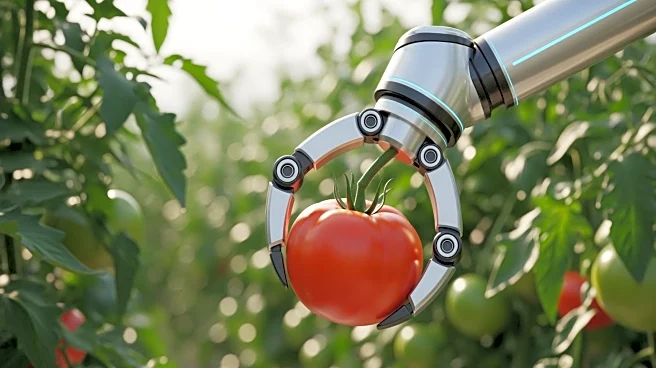
Assistant Professor Takuya Fujinaga from Osaka Metropolitan University has developed an AI-powered robotic system designed to improve the efficiency of tomato harvesting. This system utilizes image recognition and statistical analysis to determine the optimal
angle for picking each tomato, taking into account factors such as the fruit's visibility and the arrangement of stems and leaves. The robot achieved an 81% success rate in tests, demonstrating its ability to adjust its approach if the initial attempt fails. This innovation marks a significant step towards integrating robotics into agriculture, allowing robots to handle easier tasks while humans focus on more complex ones.
Why It's Important?
The development of AI-powered robots for agriculture addresses labor shortages and the need for increased efficiency in farming. By automating the harvesting process, these robots can reduce the reliance on human labor, which is particularly beneficial in regions facing workforce shortages. The ability of robots to make informed decisions and adapt to different harvesting conditions can lead to more consistent crop yields and potentially lower production costs. This technological advancement could transform agricultural practices, making them more sustainable and less labor-intensive.
What's Next?
Future developments in this field may see robots becoming more autonomous, capable of independently determining when crops are ready for harvest. This could lead to a new era of agriculture where human and robotic collaboration is commonplace. As the technology matures, it is likely that more crops will be targeted for robotic harvesting, expanding the scope of automation in agriculture. Stakeholders in the agricultural sector, including farmers and technology developers, will need to adapt to these changes and explore new business models that incorporate robotic solutions.