








What's Happening?
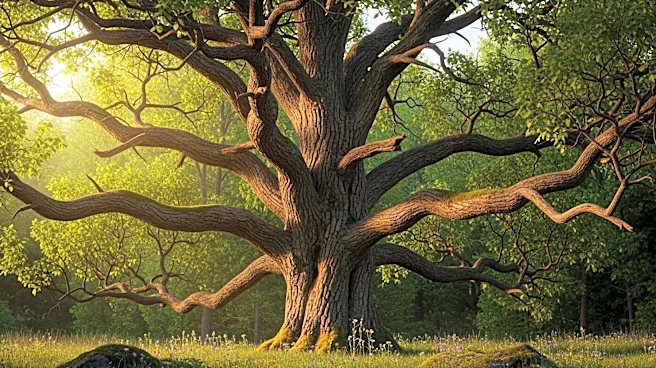
A crab apple tree in Epping Forest, believed to be over 300 years old, has been identified as the inspiration for the illustration of Crabapple Cottage in the Brambly Hedge children's book series by Jill Barklem. The tree, located near Barn Hoppitt and
Warren Pond, is the only known pollarded tree of its species in the forest. Jill Barklem's children, Peter and Lizzie, confirmed the tree's significance, noting its resemblance to their mother's illustrations. The Brambly Hedge series, which began in 1980, features a community of mice and has sold over seven million copies. The discovery highlights the connection between the beloved series and the real-life landscape that inspired it.
Why It's Important?
The identification of the tree as the inspiration for Crabapple Cottage underscores the enduring impact of Jill Barklem's work on children's literature. The Brambly Hedge series has been a staple in children's bookshelves for decades, and this discovery adds a tangible connection to the stories. It also highlights the importance of preserving natural landscapes like Epping Forest, which serve as sources of inspiration for artists and authors. The tree's identification may boost interest in the Brambly Hedge-themed trail in Epping Forest, potentially increasing tourism and awareness of the forest's cultural and ecological significance.
What's Next?
The discovery of the tree may lead to increased efforts to preserve and promote Epping Forest as a site of literary and ecological importance. The City of London Corporation, which manages the forest, may enhance the Brambly Hedge-themed trail to attract more visitors. Additionally, there could be initiatives to educate the public about the forest's role in inspiring literature and the importance of conservation. The tree's newfound fame might also inspire further literary and artistic projects that draw on the rich history and natural beauty of Epping Forest.
Beyond the Headlines
The connection between the tree and the Brambly Hedge series highlights the broader cultural significance of natural landscapes in storytelling. It raises awareness about the role of nature in creative processes and the need to protect such environments for future generations. The story also reflects on the legacy of Jill Barklem, whose work continues to resonate with readers worldwide. This discovery may inspire other authors and illustrators to explore and document the natural world, fostering a deeper appreciation for the environment in literature.