









What's Happening?
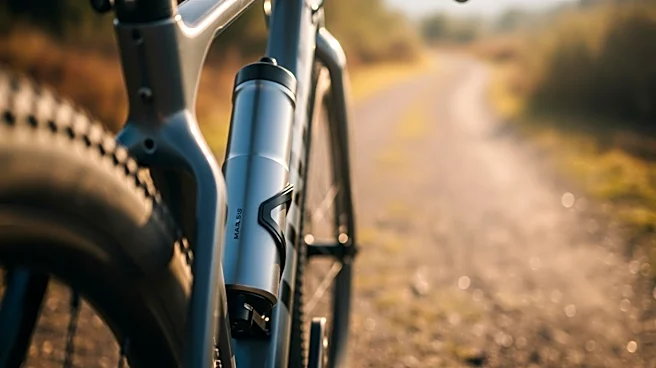
Rimpact, a UK-based manufacturer, has launched a new product aimed at reducing fatigue for gravel bike riders. The product, a bolt-on tuned mass damper (TMD), is designed to improve comfort during long rides on rough terrain. The device, priced at £229.99,
adds a weight penalty of 400 grams to the bike. It attaches to the bike's fork using a modified flat mount adapter and is compatible with 140 mm or 160 mm rotors. The TMD consists of a metal tube housing a weight suspended between two springs. When the bike encounters a bump, the weight compresses the lower spring, and as the spring rebounds, the weight shifts back, oscillating between the two springs. This mechanism is intended to smooth out the energy transfer to the rider, reducing the initial peak force experienced at the headtube. The concept is inspired by engineering tools used in structures like skyscrapers to dampen vibrations.
Why It's Important?
The introduction of Rimpact's mass damper could significantly impact the gravel biking community by offering a new method to enhance rider comfort and reduce fatigue. This innovation is particularly relevant for long-distance riders who face various vibrational frequencies on rough terrains. By smoothing out the energy transfer, the device aims to 'take the edge off' the ride, potentially making gravel biking more accessible and enjoyable. The product's success could influence other manufacturers to explore similar technologies, potentially leading to broader adoption in the cycling industry. However, the product's effectiveness and value for money remain to be fully validated, as it competes with traditional suspension systems and other comfort-enhancing components.
What's Next?
Rimpact's mass damper is already seeing use in World Cup Downhill racing, indicating potential for broader adoption in competitive cycling. The company faces the challenge of convincing consumers of the product's benefits, especially given its weight penalty and cost. Future steps may include conducting more extensive testing and gathering user feedback to validate the product's claims. If successful, this could lead to further innovations in bike design and comfort technologies. Additionally, the cycling community may see increased interest in alternative damping solutions, potentially sparking new developments in the industry.