
What's Happening?
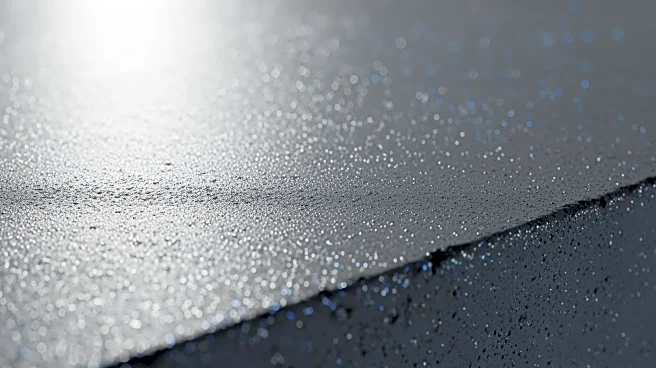
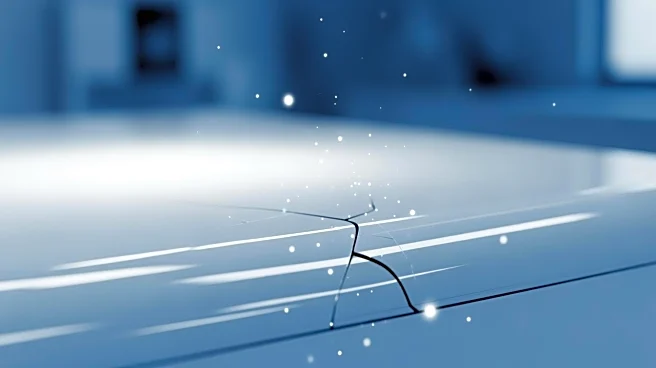
Researchers have developed a self-healing transparent coating that repairs itself and fights bacteria, maintaining clarity and structure even after damage. The coating, made from polyurethane and dynamic
selenonium salts, can heal scratches under moderate heat and prevent bacterial growth. This innovation addresses the need for durable, antibacterial coatings in various applications, including electronics, marine sensors, and medical devices. The coating's ability to maintain transparency and antibacterial function after exposure to harsh conditions suggests its potential for long-lasting protective films.
Why It's Important?
The development of this self-healing coating represents a significant advancement in material science, offering a solution to common issues like scratches and microbial contamination. Its application could extend the lifespan of devices and surfaces, reducing maintenance costs and enhancing durability. The coating's antibacterial properties are particularly relevant in healthcare and marine environments, where hygiene and biofouling are major concerns. This innovation aligns with sustainability goals, as the coating's recyclability supports circular material design, potentially reducing waste and environmental impact.
Beyond the Headlines
The introduction of self-healing, antibacterial coatings could lead to broader changes in manufacturing and product design. Industries may adopt these materials to improve product longevity and performance, influencing consumer expectations for durability and hygiene. The technology also raises questions about the balance between innovation and cost, as manufacturers consider the economic feasibility of integrating such advanced materials. As research continues, the coating's scalability and adaptability to different applications will be critical in determining its widespread adoption.