



What's Happening?
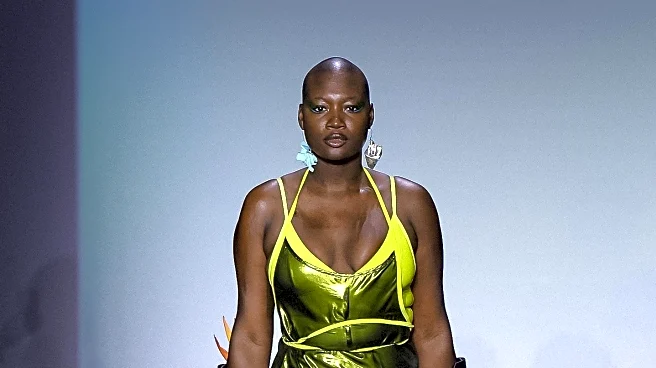
At the recent London Fashion Week, emerging designers such as Karoline Vitto, Phoebe English, and Sinead Gorey showcased a diverse range of body types on the runway, countering the broader fashion industry's shift towards ultra-thin models. This move
comes as a response to concerns about the declining representation of plus-size models, which accounted for only 0.9% of catwalk appearances in major fashion weeks last year. Vitto, who returned to the catwalk after two years, emphasized the importance of size inclusivity by featuring models ranging from UK size 8 to 22. The designers employed street casting to include a wide array of body shapes, reflecting a commitment to diversity despite budget constraints. High-profile models like Jocelyn Corona and Nyakier Buong participated, supporting the initiative to challenge the industry's narrow beauty standards.
Why It's Important?
The push for body diversity at London Fashion Week highlights a critical dialogue within the fashion industry about inclusivity and representation. As major fashion houses continue to favor thinness, emerging designers are setting a precedent for change by showcasing a broader spectrum of body types. This shift is significant as it challenges the industry's traditional norms and promotes a more inclusive definition of beauty. The representation of diverse body types not only impacts the fashion industry but also influences societal perceptions of beauty and self-worth. By prioritizing inclusivity, these designers are advocating for a fashion landscape that reflects the diversity of its audience, potentially inspiring larger brands to follow suit.
What's Next?
The actions of these emerging designers may prompt a reevaluation of casting practices across the fashion industry. If successful, this movement could lead to increased demand for diverse models, encouraging major fashion houses to adopt similar practices. The industry's response to this initiative will be crucial in determining whether body diversity becomes a sustained trend or remains a niche effort. Additionally, the financial viability of inclusive fashion lines will be tested as they seek to balance artistic vision with commercial success. The continued advocacy for diversity by influential figures and brands could further drive change, potentially reshaping industry standards and consumer expectations.
Beyond the Headlines
The emphasis on body diversity at London Fashion Week also raises questions about the ethical responsibilities of the fashion industry. As designers like Vitto challenge the status quo, they highlight the need for a more inclusive and representative fashion narrative. This movement could lead to broader cultural shifts, encouraging acceptance and celebration of all body types. Furthermore, the financial implications for brands that embrace diversity could be significant, as they tap into a wider consumer base seeking representation. The industry's response to this challenge will be indicative of its willingness to evolve and address longstanding issues of inclusivity and representation.