
What's Happening?
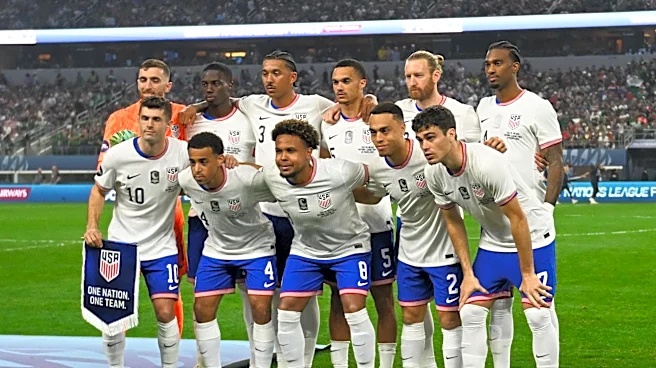
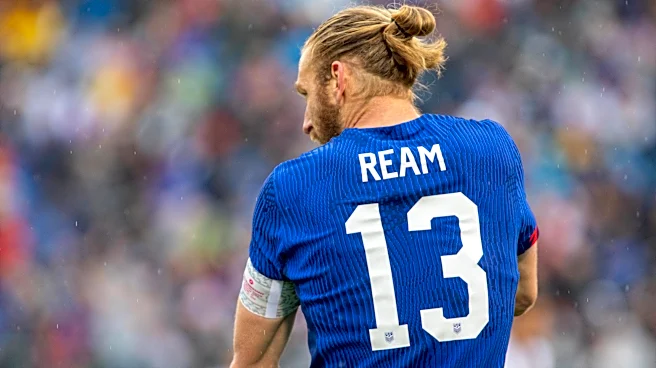
Tim Ream, a 38-year-old defender, has been appointed as the captain of the U.S. national soccer team for the upcoming World Cup. The announcement was made by coach Mauricio Pochettino during a news conference
at the U.S. National Soccer Training Center. Ream, who plays for Charlotte in Major League Soccer, expressed his surprise and gratitude upon receiving the honor. He is set to become the oldest U.S. player to appear in a World Cup, surpassing the previous record held by Fernando Clavijo. Ream has been a consistent presence in the national team, having started all four games in the 2022 World Cup and captained the team in 17 of 24 games since Pochettino took over as coach.
Why It's Important?
Ream's appointment as captain is significant as it highlights his leadership qualities and experience, both on and off the field. His role as captain is expected to provide stability and guidance to the team, especially given his extensive international experience. This decision also reflects the trust and confidence that coach Pochettino has in Ream's ability to lead the team in a home World Cup. The appointment may influence team dynamics and strategies, as Ream's leadership style and experience could play a crucial role in the team's performance. Additionally, his age and experience could serve as an inspiration to younger players, emphasizing the value of perseverance and dedication in sports.
What's Next?
As the World Cup approaches, Ream will be preparing to lead the U.S. team in their opening match against Paraguay on June 12. The team will likely focus on training and strategizing under Ream's leadership to ensure a strong performance. Stakeholders such as fans, sponsors, and the soccer community will be watching closely to see how Ream's captaincy impacts the team's performance. The decision may also prompt discussions about leadership roles within the team and the importance of experience in high-pressure tournaments.
Beyond the Headlines
Ream's appointment as captain could have broader implications for the perception of age and experience in sports. It challenges the notion that younger players are always preferred for leadership roles, highlighting the value of seasoned players who bring a wealth of experience and maturity. This decision may influence other teams and sports organizations to reconsider their criteria for leadership positions, potentially leading to a shift in how veteran players are viewed and utilized in competitive sports.