





What's Happening?
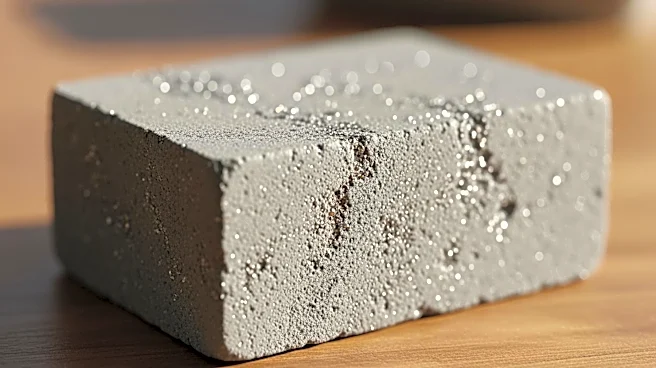
A recent study published in Scientific Reports highlights the development of a hybrid binder that significantly reduces the carbon footprint of cement. The binder, composed of fly ash, slag, coir biomass ash, and graphene, cuts embodied carbon by nearly
45% while enhancing strength and durability. This innovative approach addresses the environmental impact of ordinary Portland cement, a major source of global carbon dioxide emissions due to its energy-intensive clinker production. The study combines industrial byproducts and advanced materials to create a more effective low-carbon binder. The optimized concrete mix demonstrated improved compressive strength and chloride resistance, outperforming conventional mixes. The research also employed predictive modeling to balance compressive strength, durability, embodied CO2, and cost, showcasing a systematic approach to mix design.
Why It's Important?
The development of this hybrid binder is crucial for the construction industry, which is a significant contributor to global carbon emissions. By reducing the carbon footprint of cement, this innovation supports efforts to mitigate climate change and promote sustainable building practices. The enhanced strength and durability of the concrete mix could lead to longer-lasting infrastructure, reducing the need for frequent repairs and replacements. This advancement aligns with the growing demand for eco-friendly construction materials and practices, potentially influencing industry standards and regulations. The study's data-driven approach to mix design could pave the way for more targeted and efficient development of sustainable concrete formulations, benefiting both the environment and the economy.
What's Next?
Further validation and testing are needed to extend the applicability of this hybrid binder beyond the formulations examined in the study. The construction industry may explore integrating this binder into commercial projects, potentially leading to widespread adoption of lower-carbon concrete. As regulatory bodies increasingly focus on sustainability, this innovation could influence future building codes and standards. Researchers may continue to refine the mix design process, leveraging predictive modeling to optimize performance across various concrete applications. The success of this binder could inspire similar approaches in other sectors seeking to reduce their environmental impact.
Beyond the Headlines
The study's approach to mix design highlights the potential for data-driven methodologies to revolutionize material development. By balancing multiple performance requirements, researchers can create more efficient and sustainable solutions. This framework could be applied to other areas of construction and manufacturing, promoting innovation and sustainability. The use of graphene nanoplatelets in the binder also underscores the growing interest in nanotechnology to enhance material properties. As industries seek to reduce their carbon footprint, the integration of advanced materials and technologies will likely become more prevalent, driving long-term shifts in production and consumption patterns.