



What's Happening?
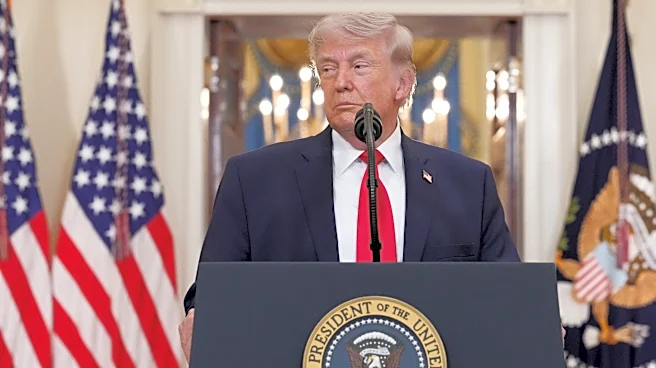
President Donald Trump has signed an executive order aimed at preserving the integrity of college athletics by addressing issues related to transfers, eligibility, and pay-for-play. The order, signed on April 3, introduces several key measures, including
limiting college athletes to a maximum of five seasons within a five-year period and allowing only one transfer without penalty before graduation. Schools that fail to comply with these regulations risk losing federal funding. Additionally, the order seeks to ensure medical care for student-athletes, implement revenue-sharing to support women's and Olympic sports, and outlaw improper financial arrangements by NIL collectives. The order also directs the Federal Trade Commission and the attorney general to enforce these measures and calls on Congress to pass related legislation.
Why It's Important?
This executive order represents a significant intervention in the ongoing debate over the governance of college sports, particularly concerning athlete compensation and transfer rules. By setting stricter guidelines, the order aims to create a more equitable environment for student-athletes, potentially reducing the influence of wealthier institutions that can afford to offer lucrative incentives. The focus on medical care and revenue-sharing could enhance support for athletes, especially in less financially robust sports. However, the order's impact will depend on its enforcement and the response from educational institutions and athletic organizations. The NCAA and other stakeholders may need to adjust their policies to align with the new federal directives.
What's Next?
The executive order's implementation will likely face scrutiny and potential legal challenges, as executive orders can be contested in court. The NCAA and college sports programs will need to evaluate their current practices and make necessary adjustments to comply with the new regulations. Congress may also engage in legislative discussions to address the broader issues highlighted by the order. Stakeholders, including college administrators, coaches, and student-athletes, will be closely monitoring the developments to understand how these changes will affect the landscape of college sports.