



What's Happening?
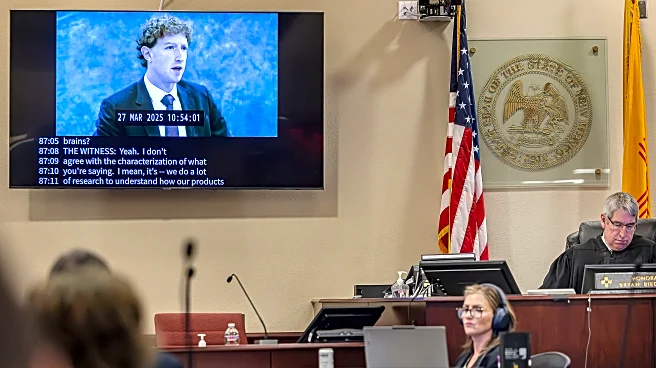
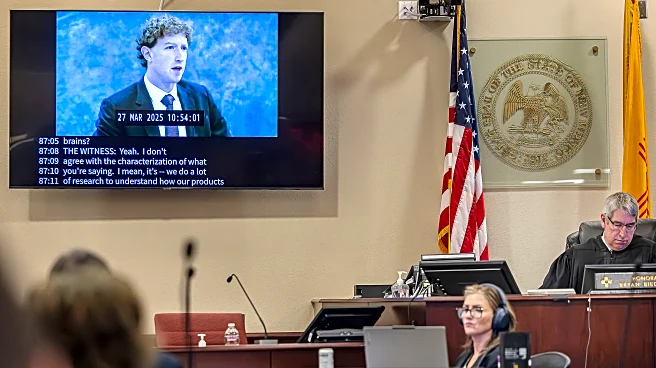
A Los Angeles jury has found Meta, the parent company of Facebook, and YouTube negligent in a landmark trial concerning social media addiction. The jury awarded $3 million in compensation to a young woman, identified as KGM, who claimed she became addicted
to these platforms as a child. The trial, which lasted a month, included testimony from Facebook founder Mark Zuckerberg. This case is part of a broader legal challenge against tech companies, with a recent New Mexico jury also ordering Meta to pay $375 million for endangering children. The lawsuits argue that these platforms are designed with addictive features, such as endless scrolling, which keep users engaged and can lead to mental health issues like anxiety and depression.
Why It's Important?
This verdict marks a significant shift in the legal landscape for tech companies, which have long been shielded by legal protections that limited their liability for user-generated content. The ruling suggests that these protections are weakening, potentially opening the door for more lawsuits against tech giants. The outcome of this case could have far-reaching implications for the tech industry, as it may encourage more individuals, parents, and even state attorneys general to pursue legal action against social media companies. This could lead to increased regulatory scrutiny and pressure on these companies to modify their platform designs to mitigate potential harm to users, particularly minors.
What's Next?
Meta has announced its intention to appeal the New Mexico verdict, indicating that the company is prepared to continue fighting these legal battles. However, with thousands of similar lawsuits pending, tech companies may need to reassess their legal strategies and consider potential settlements or changes to their platform designs. The outcome of these cases could influence future legislation aimed at regulating social media platforms and protecting users, especially children, from potential harm. Stakeholders, including lawmakers and advocacy groups, are likely to closely monitor these developments as they could set precedents for future legal and regulatory actions.