

What's Happening?
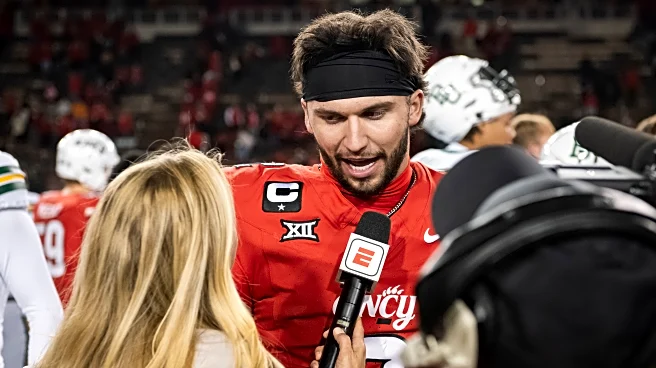
The University of Cincinnati has filed a lawsuit against former quarterback Brendan Sorsby, who transferred to Texas Tech, for allegedly breaching his contract. Sorsby had signed a two-season name, image, and likeness (NIL) agreement with Cincinnati,
which included a clause requiring him to pay a buyout if he left early. The university claims Sorsby owes $1 million in liquidated damages after he transferred before the contract's expiration. Sorsby, who played two seasons with Cincinnati, was a top transfer prospect and signed a lucrative deal with Texas Tech reportedly worth $5 million. Cincinnati's athletics department emphasized its commitment to enforcing contractual agreements with student-athletes.
Why It's Important?
This lawsuit highlights the complexities and potential legal challenges associated with NIL agreements in college sports. As universities increasingly engage in NIL deals, the enforcement of such contracts becomes crucial to protect institutional interests. The outcome of this case could set a precedent for how similar disputes are handled in the future, impacting both universities and student-athletes. It underscores the importance of clear contractual terms and the potential financial implications for athletes who breach agreements. The case also reflects the growing financial stakes in college athletics, where NIL deals can significantly influence player decisions and university strategies.
What's Next?
The legal proceedings will determine whether Sorsby is required to pay the buyout, potentially influencing future NIL contract negotiations. Universities and athletes may need to reassess their agreements to ensure clarity and enforceability. The case could prompt other institutions to review their NIL policies and contracts to prevent similar disputes. Additionally, the outcome may affect Sorsby's career and financial situation, as well as Texas Tech's involvement in the matter. Stakeholders in college sports, including legal experts and athletic departments, will likely monitor the case closely for its implications on NIL agreements.