





What's Happening?
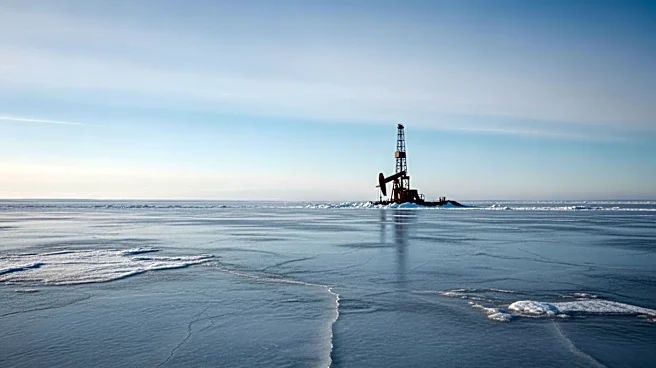
The recent auction of oil and gas leases in Alaska's Arctic National Wildlife Refuge (ANWR) attracted only two bidders, resulting in winning bids totaling $3.7 million for five tracts of land. This outcome reflects a tepid response from the industry,
with major oil companies notably absent. The auction, mandated by legislation from President Trump's administration, is part of a broader plan to open the refuge to energy development. However, the sale's lackluster results highlight the significant challenges facing potential developers, including political instability, environmental litigation, and infrastructure deficits. The Alaska Industrial Development and Export Authority (AIDEA), a state-owned agency, and Hex Energy, a local operator, were the only participants, underscoring the reluctance of major integrated oil companies to engage in this politically and environmentally sensitive area.
Why It's Important?
The limited interest in the ANWR lease sale underscores the complex risk environment that deters major oil companies from investing in the region. Political cycle risk, where permits issued under one administration may be revoked by the next, poses a significant threat to long-term investments. Additionally, environmental, social, and governance (ESG) pressures from institutional investors further discourage participation in high-controversy projects like Arctic drilling. The operational challenges and high costs associated with Arctic exploration, combined with the availability of less controversial alternatives, make ANWR a less attractive investment. This situation reflects broader trends in the energy sector, where companies are increasingly cautious about engaging in projects that could face significant regulatory and reputational hurdles.
What's Next?
The federal government is legally obligated to conduct at least three more lease sales in ANWR by 2035, as per the One Big Beautiful Bill Act. Future auctions will serve as indicators of whether the structural barriers to Arctic development have shifted. If oil prices rise significantly and political and ESG pressures ease, mid-tier operators might show interest. However, a change in federal administration could lead to the suspension of these auctions, reinforcing the perception of ANWR as a commercially unviable investment. The ongoing lack of major industry participation suggests that unless these conditions change, future sales may continue to see minimal interest.
Beyond the Headlines
The ANWR lease sale highlights the broader debate over energy development in environmentally sensitive areas. The refuge is home to diverse wildlife, and its development has faced strong opposition from environmental groups and indigenous communities. The Gwich'in people, for example, view the area as sacred and vital for their subsistence. This opposition adds another layer of complexity for companies considering investment, as they must navigate not only regulatory and financial challenges but also cultural and ethical considerations. The situation in ANWR exemplifies the growing tension between energy development and environmental conservation, a dynamic that is likely to influence future policy and investment decisions in the U.S. energy sector.