






What's Happening?
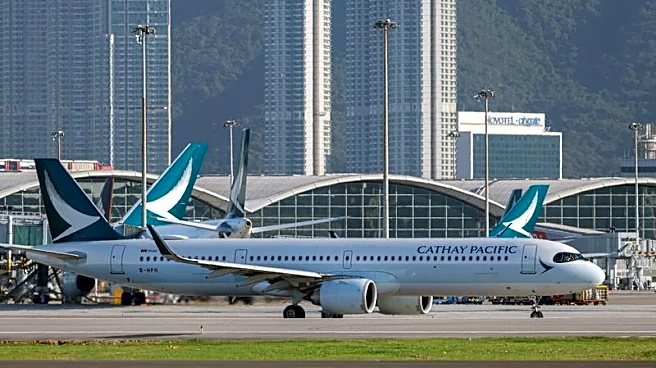
Air Premia, SAS Scandinavian Airlines, and Air China are set to launch new international routes to and from Asia, responding to increasing demand in these markets. Air Premia will introduce a Seoul Incheon-Washington Dulles service on April 24, using
Boeing 787-9 aircraft. This move adds competition to the U.S.-South Korea long-haul market, which is primarily driven by government, business, and diaspora travel. The airline aims to capture a 39% capacity share in this market, competing with Korean Air. Meanwhile, SAS plans to launch a Copenhagen-Mumbai route on June 2, marking its return to India after 17 years. This route will offer about 2,600 two-way weekly seats, aligning with SAS's strategy to expand long-haul routes from its Copenhagen hub. Air China will resume its Beijing-New Delhi service on April 21, restoring air links between China and India that were suspended due to the pandemic and political tensions.
Why It's Important?
These expansions by Air Premia, SAS, and Air China highlight a significant recovery in international air travel, particularly in the Asia-U.S. and Asia-Europe markets. For Air Premia, the new route to Washington Dulles represents an opportunity to tap into the Korean diaspora and premium leisure traffic, positioning itself as a cost-effective alternative to full-service carriers. SAS's new route to Mumbai reflects growing demand between Denmark and India, offering a direct link that bypasses Middle Eastern hubs affected by geopolitical instability. Air China's resumption of flights to New Delhi is a crucial step in restoring connectivity between China and India, a market still recovering from pandemic-related disruptions. These developments are likely to increase competition in these markets, potentially leading to more competitive pricing and improved services for travelers.
What's Next?
As these airlines launch their new routes, they will likely monitor passenger demand closely to adjust capacity and frequency as needed. Air Premia's entry into the U.S. market could prompt other carriers to enhance their offerings to maintain market share. SAS's return to India may encourage other European airlines to explore similar opportunities, especially as geopolitical tensions in the Middle East continue to affect traditional connecting routes. Air China's resumption of services to India could pave the way for further expansion in the region, particularly as political relations stabilize. Overall, these moves could lead to increased connectivity and economic ties between these regions, benefiting both business and leisure travelers.