
What's Happening?
The NFL's free agency period for 2026 has seen a significant shift in team spending behavior. Initially, teams engaged in a spending spree, with contracts worth $2.3 billion signed within the first eight hours of the negotiating period. However, as the first wave
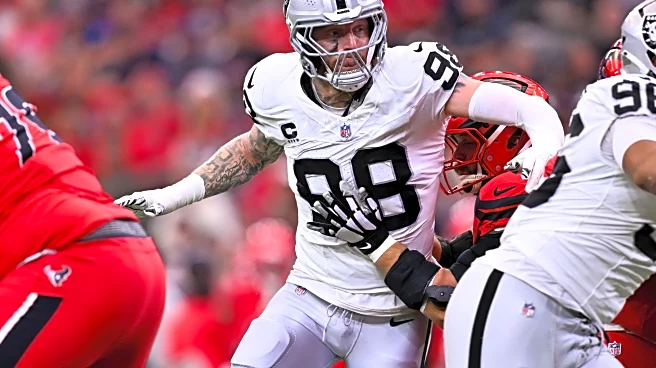
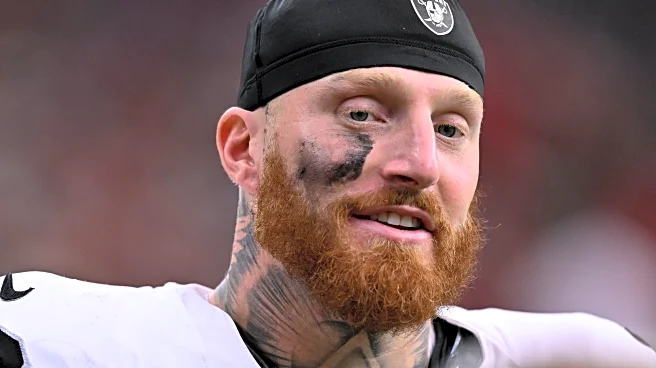
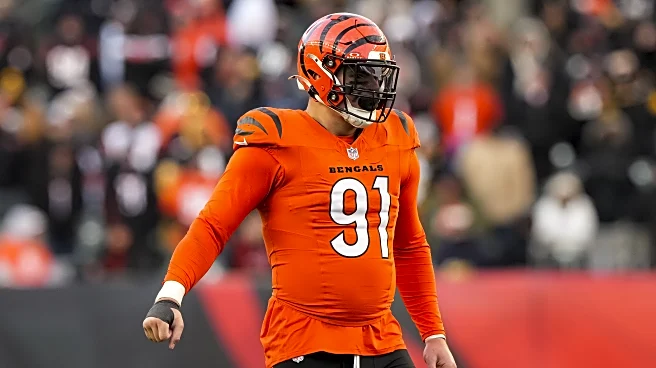
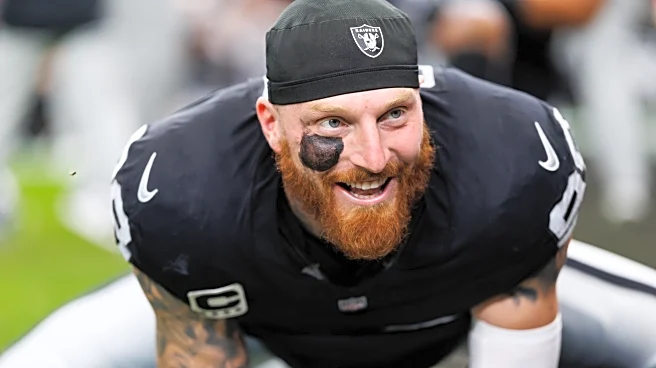
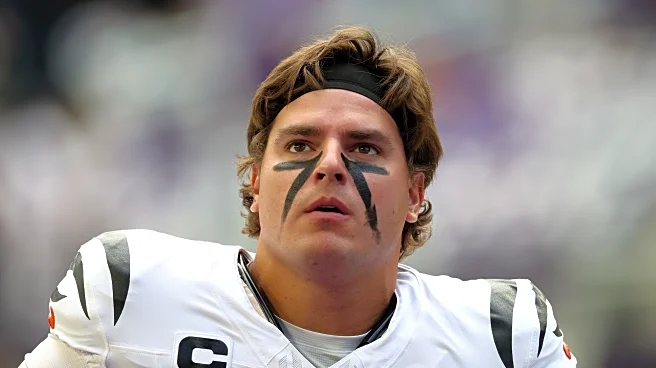
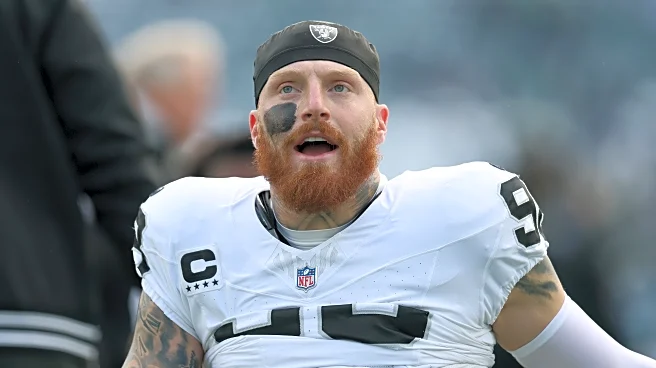
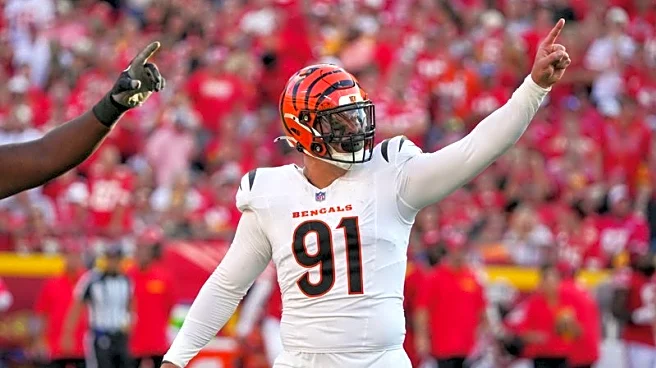
of free agency concluded, teams began exercising more fiscal restraint, focusing on signing players at better value. Notable developments include the Baltimore Ravens pulling out of a trade agreement with the Las Vegas Raiders for Maxx Crosby due to medical concerns, and the Raiders subsequently signing Trey Hendrickson. Additionally, Tyler Linderbaum reset the center market with a three-year, $81 million contract from the Raiders, significantly increasing the pay scale for centers. The NFL owners meetings, scheduled for March 29-April 1, are expected to mark the practical end of free agency, with teams shifting focus to the upcoming NFL Draft.
Why It's Important?
The shift in spending behavior during the NFL free agency period highlights the evolving strategies of teams in managing their salary caps and player acquisitions. The initial spending spree indicates a competitive market where teams are willing to invest heavily in talent to improve their rosters. However, the subsequent fiscal restraint suggests a more strategic approach, aiming for long-term value and sustainability. This change could impact player negotiations, contract structures, and team dynamics, influencing the overall competitiveness of the league. Teams like the Raiders and Titans, with significant salary cap room, have made substantial investments, potentially altering their future performance and league standings.
What's Next?
As the NFL owners meetings approach, teams are expected to finalize their free agency moves and shift focus to the 2026 NFL Draft, scheduled for April 23-25. The draft will provide an opportunity for teams to address remaining roster needs and build for the future. Additionally, the fallout from the Ravens' decision to pull out of the Maxx Crosby trade may lead to further negotiations or attempts to trade Crosby before the draft. Teams will continue to evaluate their strategies, balancing immediate needs with long-term goals, as they prepare for the upcoming season.
Beyond the Headlines
The developments in the NFL free agency period may have broader implications for player health assessments and contract negotiations. The Ravens' decision to withdraw from the Crosby trade due to medical concerns underscores the importance of thorough physical evaluations and their impact on player transactions. This could lead to increased scrutiny and caution in future trades and signings, affecting player mobility and team strategies. Additionally, the resetting of the center market by Tyler Linderbaum's contract may influence salary expectations and negotiations for other positions, potentially leading to shifts in player valuation across the league.