







What's Happening?
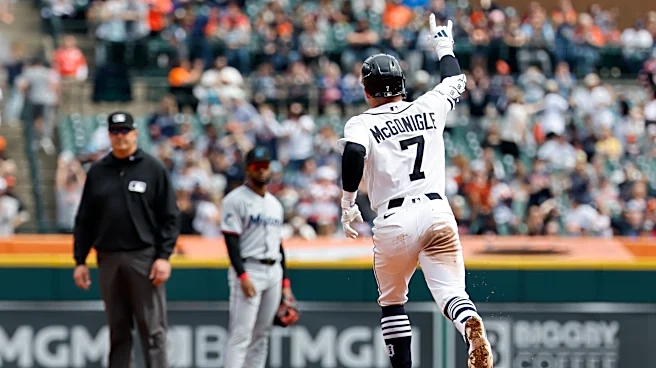
The Detroit Tigers have announced an eight-year contract extension with rookie infielder Kevin McGonigle, valued at $150 million. This agreement, which begins in the 2027 season, extends through 2034 and includes potential escalators that could increase
the total value to $160 million. McGonigle, who is 21 years old and ranked as ESPN's No. 2 prospect for the 2026 season, has quickly made an impact by becoming the youngest Tigers player on an Opening Day roster since 2003. He debuted with an impressive performance, securing four hits in his first major league game. The contract covers McGonigle's final five seasons of club control and his first three years of free agency eligibility. The deal includes a $14 million signing bonus and additional bonuses if the contract is assigned to another team.
Why It's Important?
This contract extension is significant for both the Detroit Tigers and Kevin McGonigle. For the Tigers, securing a promising young talent like McGonigle ensures stability and potential growth for the team's future. It reflects the team's commitment to building a competitive roster by investing in young players who can contribute to long-term success. For McGonigle, this deal provides financial security and a clear path to develop his career with the Tigers. The extension also highlights the increasing trend in Major League Baseball of teams locking in young talent early to avoid the uncertainties of free agency. This move could influence other teams to adopt similar strategies, impacting player negotiations and team compositions across the league.
What's Next?
With the contract in place, McGonigle will continue to develop his skills and contribute to the Tigers' performance on the field. The team will likely focus on building around him and other young talents to enhance their competitiveness in the league. As McGonigle gains more experience, his role within the team could expand, potentially leading to leadership opportunities. The Tigers' management will monitor his progress and adjust their strategies to maximize his impact. Additionally, other teams may observe this extension as a model for handling their own young prospects, potentially leading to a shift in how player contracts are structured in the future.