
What's Happening?
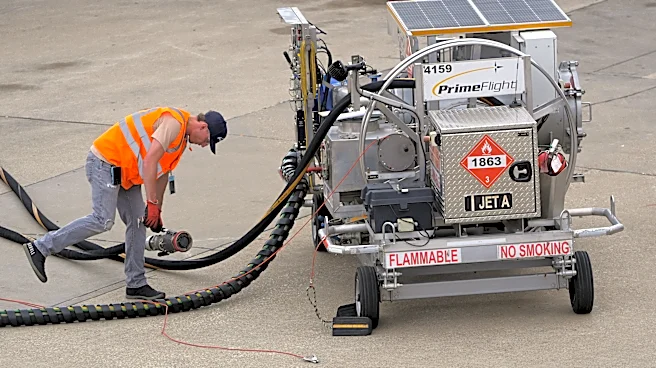
U.S. airlines are facing significant financial pressure due to a sharp increase in jet fuel costs, which have risen by 78% compared to the previous year. This surge is largely attributed to geopolitical
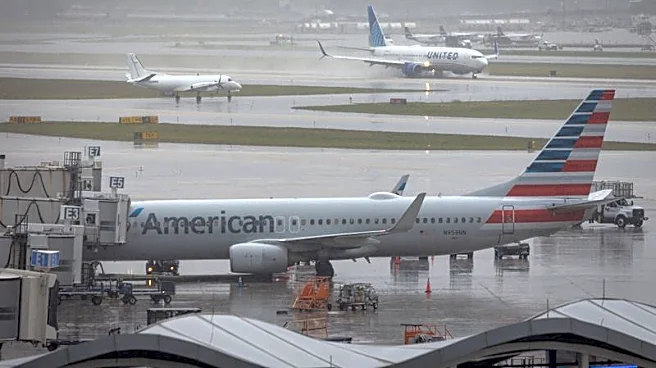
tensions in the Middle East, particularly the conflict involving the U.S. and Israel against Iran, which has disrupted oil transit routes. As a result, airlines have been forced to raise airfares and fees, cut back on perks, and adjust flight schedules to manage costs. The International Air Transport Association (IATA) has revised its profit forecasts for the global airline industry, predicting a substantial decrease in net profits for 2026.
Why It's Important?
The rising cost of jet fuel is a critical issue for the airline industry, as fuel expenses constitute a significant portion of operating costs. The current situation underscores the vulnerability of airlines to geopolitical events and fluctuations in oil prices. The financial strain on airlines could lead to further consolidation in the industry, as companies seek to maintain profitability. Additionally, the increase in airfares may impact consumer travel behavior, potentially reducing demand and affecting tourism-dependent economies.
What's Next?
Airlines may continue to adjust their operations, including further route suspensions and schedule modifications, to cope with the ongoing cost pressures. Industry stakeholders will likely advocate for policy measures to stabilize fuel prices and mitigate the impact of geopolitical tensions. The situation may also prompt airlines to accelerate investments in fuel-efficient technologies and alternative energy sources to reduce dependency on traditional jet fuel.