




What's Happening?
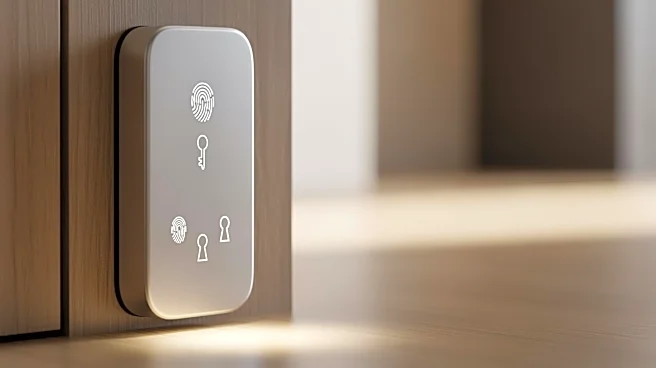
Eufy, a security company known for its no-subscription devices, has expanded its smart lock offerings with the introduction of the FamiLock line. This new series includes three models, each designed to enhance user privacy by processing biometric data
on the device itself, rather than in the cloud. The flagship model, FamiLock E40, combines a video doorbell with a smart lock, utilizing facial recognition and a 2K-resolution camera for hands-free unlocking. It is compatible with various smart home apps and is priced at $299.99. Another model, the FamiLock E35, employs palm recognition technology, allowing users to unlock doors by scanning their palm veins, priced similarly at $300. The entry-level FamiLock E32, priced at $139.99, supports fingerprint entry and multiple home apps but lacks face or palm recognition. These locks are currently available at Home Depot, with plans to launch on Amazon in July.
Why It's Important?
The introduction of Eufy's FamiLock line is significant as it addresses growing privacy concerns associated with biometric data. By ensuring that data processing occurs on the device, Eufy mitigates risks related to cloud storage and unauthorized data usage, a concern highlighted by past controversies involving companies like Ring. This approach not only enhances user privacy but also eliminates subscription fees, making advanced security features more accessible. The move could influence other companies in the security industry to adopt similar privacy-focused strategies, potentially reshaping market standards and consumer expectations regarding data security and privacy.
What's Next?
Eufy's decision to initially release the FamiLock line through Home Depot, with plans to expand to Amazon, suggests a strategic rollout aimed at maximizing market reach. As these products become more widely available, consumer feedback will likely influence future iterations and enhancements. Additionally, the success of these privacy-focused locks could prompt competitors to reevaluate their own data processing practices, potentially leading to broader industry shifts towards on-device processing. Eufy's continued focus on privacy and affordability may also drive increased adoption of smart home security solutions among privacy-conscious consumers.