


What's Happening?
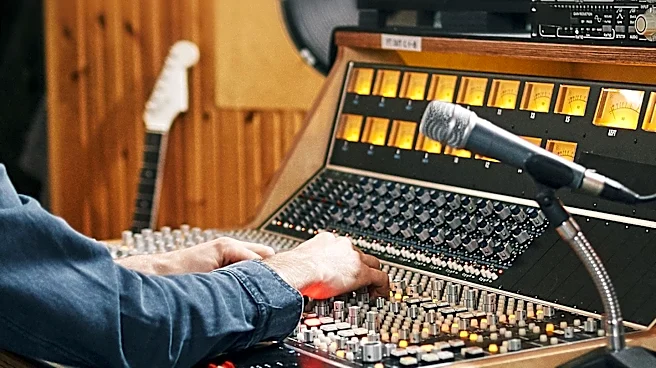
James Butera, a front-of-house (FOH) engineer and production manager, has carved a unique path in the audio industry without formal education in the field. Instead, he developed his skills through hands-on experience, working with various audio consoles
and building relationships within the industry. Butera's career began in a small church in Dallas, where he was introduced to audio engineering by chance. His dedication to learning and experimenting with audio systems led him to work with notable artists and tour managers, gaining a reputation for reliability and skill. Butera emphasizes the importance of self-education, practical experience, and building a personal style in audio engineering. He advocates for learning through real-world challenges and stresses the significance of relationships and timing in career development.
Why It's Important?
Butera's story highlights the evolving nature of career paths in technical fields, where traditional education may not always be necessary. His success underscores the value of practical experience and self-directed learning, particularly in industries like audio engineering where technology and techniques are rapidly changing. This approach can inspire others in similar fields to pursue unconventional paths, focusing on skill development and networking. Butera's emphasis on relationships and adaptability is crucial in an industry where opportunities often arise from unexpected connections. His journey also reflects broader trends in the workforce, where non-traditional education and diverse experiences are increasingly recognized and valued.
What's Next?
As Butera continues to work with high-profile artists and manage complex audio productions, his career trajectory may influence others in the industry to adopt similar self-directed learning paths. The demand for skilled audio engineers who can adapt to new technologies and environments is likely to grow, potentially leading to more opportunities for those who, like Butera, prioritize hands-on experience and relationship-building. Additionally, Butera's approach may encourage educational institutions and industry leaders to reconsider how they train and recruit talent, possibly leading to more flexible and inclusive pathways into technical careers.
Beyond the Headlines
Butera's career also raises questions about the accessibility of technical fields for individuals without formal education. His success story could prompt discussions about how to make such fields more inclusive and how to support self-taught professionals. Furthermore, his emphasis on personal style and originality in audio engineering highlights the artistic aspects of technical work, challenging the perception that such careers are purely technical. This perspective may encourage more creative individuals to explore opportunities in technical fields, blending artistic vision with technical expertise.