



What's Happening?
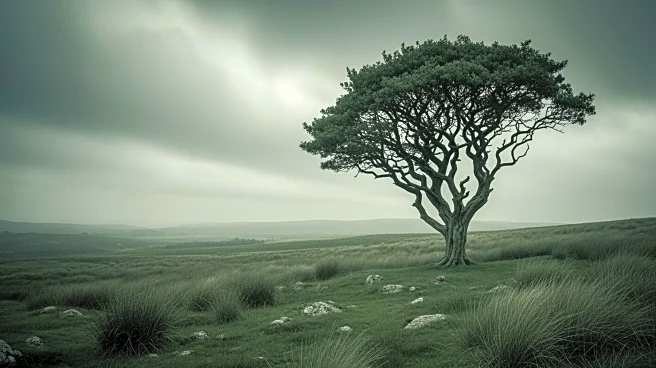
Emerald Fennell's adaptation of 'Wuthering Heights' premiered in Hollywood, presenting a modern take on Emily Brontë's classic novel. The film, starring Jacob Elordi as Heathcliff and Margot Robbie as Catherine Earnshaw, diverges from the original text with notable casting choices and the inclusion of a contemporary soundtrack by Charli XCX. Fennell, a fan of the novel, aimed to capture the emotional essence of the book rather than a direct retelling. The casting of Elordi, a white actor, as Heathcliff, who is described as dark-skinned in the novel, has been a point of discussion. Fennell explained that her vision was influenced by her personal connection to the story, emphasizing the subjective nature of adaptations. The film is set to release
on February 13, aligning with Valentine's Day weekend, which the creators believe complements the film's themes of love.
Why It's Important?
This adaptation of 'Wuthering Heights' highlights ongoing conversations about representation and creative interpretation in film. The decision to cast Jacob Elordi as Heathcliff raises questions about fidelity to source material and the responsibilities of filmmakers in portraying diverse characters. This choice reflects broader industry trends where directors balance personal vision with audience expectations. The film's release around Valentine's Day suggests a strategic marketing move to attract audiences interested in romantic narratives, potentially boosting box office performance. Additionally, the involvement of high-profile talents like Margot Robbie and Charli XCX underscores the film's appeal and potential impact on popular culture.
What's Next?
As 'Wuthering Heights' approaches its release date, audience and critical reactions will likely shape discussions about the film's creative choices. The film's performance could influence future adaptations of classic literature, particularly regarding casting decisions and modern reinterpretations. Industry stakeholders, including filmmakers and studios, may observe the film's reception to gauge audience tolerance for deviations from traditional narratives. The film's success or failure could impact the careers of those involved, including Fennell, Elordi, and Robbie, and inform their future projects.
Beyond the Headlines
The adaptation of 'Wuthering Heights' by Emerald Fennell may contribute to a broader cultural dialogue about the role of classic literature in contemporary media. It raises questions about how stories from the past can be reimagined to resonate with modern audiences while respecting their original context. This film could inspire other creators to explore innovative approaches to storytelling, challenging traditional boundaries and encouraging diverse perspectives. The project also highlights the intersection of literature, film, and music, showcasing how these art forms can collaborate to create a unique cinematic experience.