







What's Happening?
The pharmaceutical industry is witnessing a transformative shift with the integration of artificial intelligence (AI) into lean manufacturing processes. Traditionally, lean manufacturing has focused on reducing waste and improving efficiency through methods
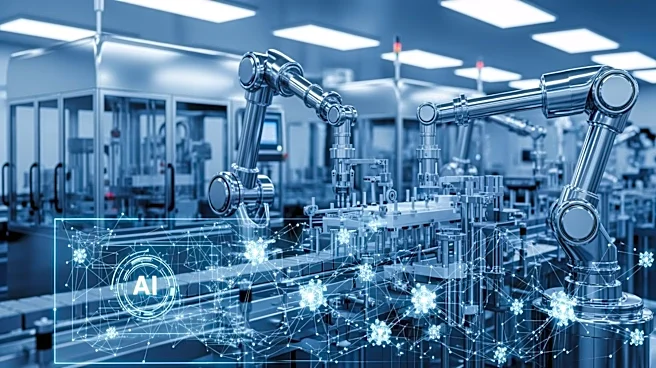
like value stream mapping and root cause analysis. However, these methods have limitations, particularly in handling the complexity of modern biopharmaceutical processes. AI and advanced data analytics are now being used to enhance these lean methodologies, allowing for more adaptive and predictive process optimization. This integration enables real-time data processing from manufacturing execution systems and equipment sensors, identifying inefficiencies and predicting issues before they occur. AI-driven digital twins, for example, can simulate production lines to dynamically identify bottlenecks, significantly improving operational efficiency.
Why It's Important?
The integration of AI into pharmaceutical manufacturing is crucial for several reasons. It not only enhances operational efficiency but also aligns with regulatory expectations for process verification and contamination control. AI-driven improvements in cycle times, deviation rates, and yield directly impact the cost of goods and patient safety. By enabling real-time decision-making and predictive maintenance, AI reduces unplanned downtime and enhances compliance with regulatory standards. This technological advancement supports the pharmaceutical industry's need for continuous improvement and adaptation to stringent regulatory environments, ultimately benefiting both manufacturers and consumers through more reliable and cost-effective drug production.
What's Next?
As AI continues to be integrated into pharmaceutical manufacturing, companies will likely focus on overcoming challenges such as data quality, change management, and model validation. Ensuring robust data governance and workforce training will be critical for successful AI adoption. Additionally, regulatory bodies are expected to increasingly support AI applications, provided they are appropriately validated and align with data integrity principles. The ongoing digital transformation in the pharmaceutical sector will likely lead to further innovations in process optimization and compliance, setting new standards for operational excellence.