


What's Happening?
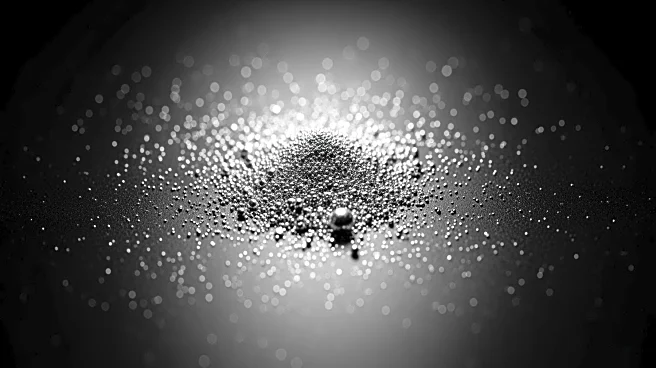
Researchers from several UK universities have developed a new aluminium alloy powder that significantly enhances the capabilities of Directed Energy Deposition (DED) Additive Manufacturing. The study, published in the International Journal of Extreme
Manufacturing, details the alloy's improved mechanical properties and reduced residual stress levels. The powder, produced by Amazemet in Poland, is based on an Al–Ni–Ce–Mn–Fe alloy and offers a 70% increase in yield strength and a 50% increase in ultimate tensile strength compared to traditional alloys. This development addresses previous limitations in alloy availability for DED processes, which are used in sectors like biomedical, energy, and transport.
Why It's Important?
The introduction of this new alloy powder is a significant advancement for the additive manufacturing industry, particularly in the U.S., where DED is increasingly used for fabricating complex components. The improved mechanical properties and reduced stress levels could lead to broader adoption of DED technology, enhancing manufacturing efficiency and product quality. This innovation may also drive competitiveness in industries reliant on high-performance materials, potentially leading to cost reductions and increased innovation in product design and manufacturing processes.
Beyond the Headlines
The development of this alloy could have long-term implications for the sustainability of manufacturing processes. By reducing defects and improving material performance, the new alloy may contribute to more efficient use of resources and energy in manufacturing. Additionally, the research highlights the importance of international collaboration in advancing technological innovations, which could inspire further cross-border partnerships in the field of additive manufacturing.