








What's Happening?
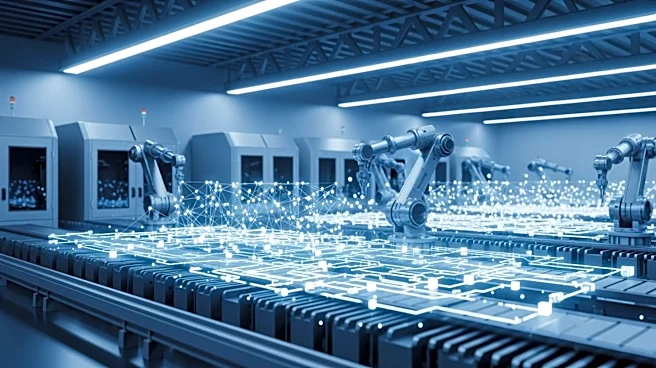
General Dynamics Ordnance and Tactical Systems (GD-OTS) has announced a partnership with Deterrence to incorporate artificial intelligence (AI) into its manufacturing operations. This collaboration aims to enhance production efficiency, operational coordination,
and manufacturing throughput by integrating Deterrence's AI capabilities with GD-OTS's production expertise. The initiative will begin at the GD-OTS facility in Mesquite, Texas, and will be expanded to other locations. The partnership focuses on creating connected manufacturing environments that support critical defense programs by reducing downtime and improving visibility across facilities. This integration is expected to continuously improve production systems through software enhancements.
Why It's Important?
The integration of AI into manufacturing processes is a significant step for GD-OTS, as it aims to address production challenges and improve efficiency in defense manufacturing. This move is crucial for maintaining competitiveness in the defense industry, where operational efficiency and technological advancements are key. By leveraging AI, GD-OTS can optimize its manufacturing operations, potentially leading to cost savings and increased production capacity. This development is particularly relevant in the context of global defense strategies, where rapid and efficient production of military equipment is essential. The partnership with Deterrence highlights the growing importance of AI in industrial applications, setting a precedent for other companies in the sector.
What's Next?
The implementation of AI capabilities at the Mesquite facility is the first step in a broader strategy to enhance GD-OTS's manufacturing operations. As the integration progresses, other GD-OTS facilities are expected to adopt similar AI-driven improvements. This could lead to a transformation in how defense manufacturing is conducted, with potential implications for supply chain management and production timelines. Stakeholders in the defense industry, including government agencies and military clients, may closely monitor the outcomes of this initiative to assess its impact on production efficiency and capability delivery. The success of this partnership could influence future collaborations between technology providers and manufacturing companies in the defense sector.