
What's Happening?
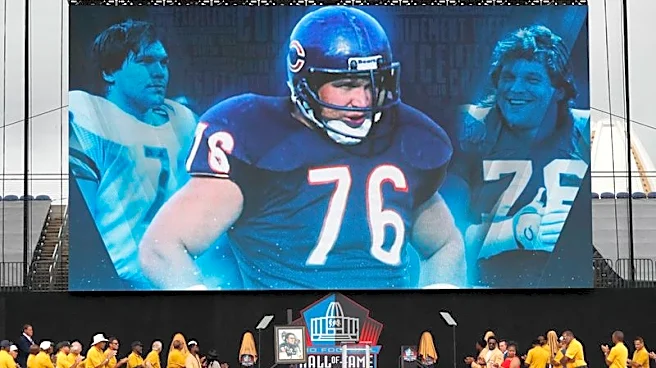
Steve McMichael, a former defensive tackle for the Chicago Bears, has been diagnosed with Stage 3 chronic traumatic encephalopathy (CTE) a year after his death. McMichael, who passed away at 67 after battling
amyotrophic lateral sclerosis (ALS), was a key player in the Bears' 1985 Super Bowl-winning team and was inducted into the Pro Football Hall of Fame in 2024. CTE, a degenerative brain disease linked to repeated head trauma, is known to cause cognitive decline and mood disorders. McMichael had pledged to donate his brain to research, highlighting the connection between CTE and ALS.
Why It's Important?
The posthumous diagnosis of CTE in Steve McMichael underscores the ongoing concerns about the long-term health impacts of playing professional football. The link between CTE and ALS, as highlighted by McMichael's case, raises awareness about the risks faced by NFL players. This diagnosis could influence future research and safety protocols in contact sports, potentially leading to changes in how the game is played and how players are protected. The findings also contribute to the broader conversation about player health and safety in the NFL.
Beyond the Headlines
McMichael's diagnosis may prompt further investigation into the relationship between CTE and ALS, potentially leading to new insights and treatments for these conditions. The case also highlights the importance of brain donation for advancing scientific understanding of sports-related brain injuries. As more cases like McMichael's come to light, there may be increased pressure on sports organizations to address these health issues more proactively.