




What's Happening?
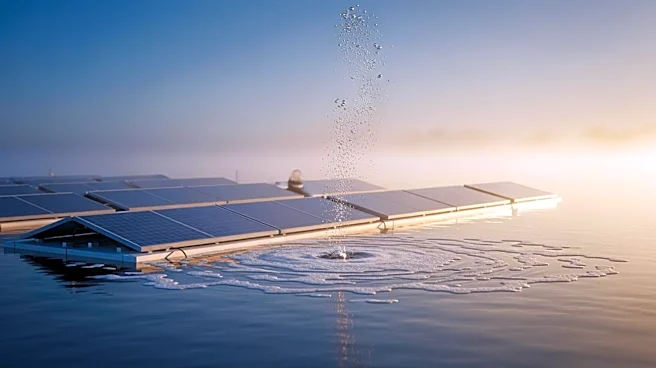
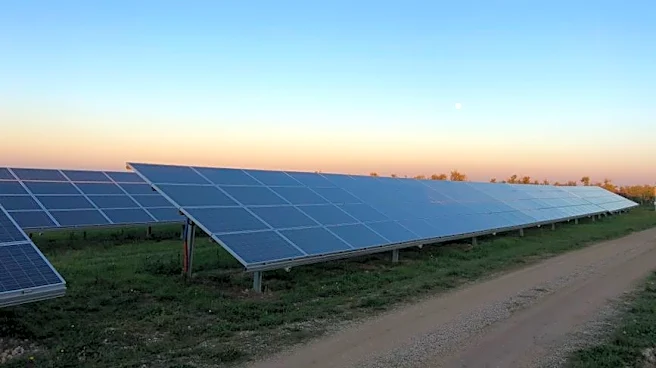
Floating solar photovoltaic (PV) systems have gained traction in the global solar power industry, with an estimated 1.5 to 2 gigawatts installed globally in 2025. These systems, which float on bodies of water, have been recognized for their efficiency
benefits due to the cooling effect of water. However, challenges remain in adapting these systems for cold climates. Koami Soulemane Hayibo, a PhD candidate at Western University, has developed a foam-based floating PV system that addresses these challenges. The system uses polyethylene foam slabs to support the solar modules, providing insulation and incorporating air bubblers to prevent ice formation. This innovation not only enhances energy yield but also offers economic advantages, making it a promising solution for cold regions.
Why It's Important?
The development of foam-based floating solar PV systems is significant as it addresses the limitations of traditional floating PV systems in cold climates. By improving energy efficiency and reducing evaporation, these systems can contribute to sustainable energy expansion in diverse environments. The economic viability of this technology could lead to broader adoption, supporting renewable energy goals and reducing reliance on fossil fuels. This innovation also highlights the potential for further research and development in the field of renewable energy, particularly in regions with harsh weather conditions.
What's Next?
The next steps involve scaling up the foam-based floating PV systems for larger projects and testing them across various water bodies. This will determine their commercial viability and potential for widespread adoption. Researchers and industry stakeholders will likely monitor the performance of these systems in real-world conditions to assess their long-term benefits and challenges. If successful, this technology could become a key component of renewable energy strategies in cold climates, influencing policy decisions and investment in the sector.
Beyond the Headlines
The introduction of foam-based floating PV systems could have broader implications for water conservation and energy efficiency. By reducing evaporation, these systems can help preserve water resources, which is crucial in regions facing water scarcity. Additionally, the integration of air bubblers to prevent ice formation demonstrates a novel approach to overcoming environmental challenges, potentially inspiring further innovations in renewable energy technologies.