
What's Happening?
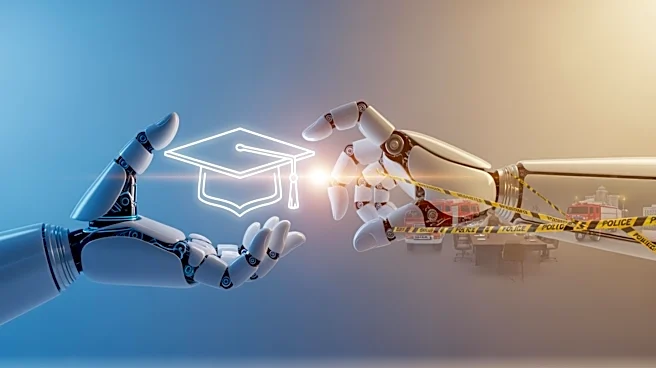
Recent discussions highlight the growing concern among young graduates about the impact of artificial intelligence (AI) on employment opportunities. As AI technology becomes more integrated into various
industries, there is a noticeable shift in the job market dynamics. Older generations perceive AI as a tool for learning, while younger individuals often view it as a means to avoid work. This generational divide is further complicated by the perception that AI usage may be diminishing cognitive skills among students. A significant portion of young people express apprehension about AI's potential to negatively affect their career prospects. Additionally, a Deloitte survey indicates that 80% of leaders, managers, and workers are worried that AI is being used by colleagues to falsely enhance productivity. This uncertainty about future job availability and quality is a pressing issue for new graduates entering the workforce.
Why It's Important?
The integration of AI into the workforce is reshaping employment landscapes, particularly affecting entry-level positions. This shift could lead to a future shortage of experienced workers as companies focus on retaining senior roles while reducing junior-level positions. The trend poses a challenge for young graduates who may find fewer opportunities to gain initial work experience. Moreover, the demand for AI-related roles, such as data analysts and machine learning specialists, underscores the need for reskilling and workforce training programs. The potential for AI to enhance productivity is significant, but it also raises ethical concerns about honesty and transparency in the workplace. As AI continues to evolve, its impact on employment will likely influence public policy, education systems, and economic strategies.
What's Next?
As AI technology continues to advance, companies and educational institutions may need to adapt by developing comprehensive training programs to equip young workers with the necessary skills for AI-related roles. Policymakers might also consider implementing regulations to ensure ethical AI usage in the workplace, addressing concerns about productivity and job displacement. The ongoing dialogue between industry leaders, educators, and government officials will be crucial in shaping a balanced approach to AI integration that supports both economic growth and workforce stability.
Beyond the Headlines
The broader implications of AI's impact on employment extend to cultural and ethical dimensions. The potential for AI to alter traditional career paths raises questions about the value of human skills and creativity in an increasingly automated world. As AI becomes more prevalent, society may need to redefine concepts of work, productivity, and success. Additionally, the psychological effects of AI on young workers, such as increased anxiety and uncertainty about the future, warrant attention from mental health professionals and policymakers.