







What's Happening?
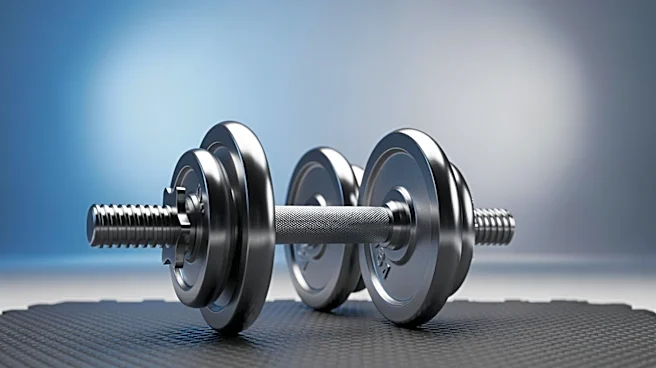
Recent insights from fitness experts suggest that muscle growth can be achieved with as few as two strength training sessions per week. According to certified personal trainers Brooke Taylor and Alex McBrairty, the key to building muscle lies in the quality
and intensity of workouts rather than the frequency. They emphasize the importance of progressive overload, which involves gradually increasing the weight, sets, or reps to continuously challenge the muscles. Research supports this approach, indicating that training close to failure with sufficient volume can lead to muscle gains even with limited weekly sessions. The experts recommend focusing on compound exercises that target multiple muscle groups and ensuring each session is challenging enough to stimulate growth.
Why It's Important?
This approach to fitness is significant as it offers a practical solution for individuals with busy schedules who struggle to find time for frequent workouts. By demonstrating that effective muscle building can occur with fewer sessions, it encourages more people to engage in strength training without the pressure of committing to extensive gym routines. This can lead to improved public health outcomes, as more individuals may adopt regular exercise habits. Additionally, it challenges traditional fitness norms that often prioritize quantity over quality, potentially reshaping how workout programs are designed and marketed.
What's Next?
As this perspective gains traction, fitness professionals and gyms may begin to offer more tailored programs that focus on maximizing the effectiveness of fewer workouts. This could include personalized training plans that emphasize progressive overload and compound exercises. Furthermore, there may be increased research into optimizing workout strategies for different demographics, such as beginners or those with specific health conditions, to ensure that the benefits of minimal training are accessible to a wider audience.
Beyond the Headlines
The shift towards valuing workout quality over quantity may also influence broader cultural attitudes towards fitness and wellness. It could lead to a more inclusive fitness industry that accommodates diverse lifestyles and physical capabilities. Additionally, this approach may encourage individuals to focus on holistic health, integrating strength training with other wellness practices such as nutrition and mental health support.