
What's Happening?
Tesla has reported a 16% increase in revenue for the first quarter of 2026, reaching $22.38 billion, compared to $19.3 billion in the same period last year. This growth is attributed to increased automotive
revenue and active subscriptions to its Full Self-Driving (FSD) system, which now has 1.28 million subscribers. Despite challenges in its core EV business, Tesla's shares rose 4% in after-hours trading, buoyed by a jump in free cash flow and positive earnings results. The company delivered 358,023 EVs globally, slightly below analyst expectations, but produced 408,386 vehicles, indicating a significant inventory buildup. Tesla's transition towards AI and robotics, including its Optimus humanoid robot and robotaxi service, is ongoing, with plans to begin large-scale production soon.
Why It's Important?
Tesla's financial performance is crucial for the automotive and tech industries, as it sets benchmarks for innovation and profitability. The company's ability to increase revenue despite lagging EV sales highlights its strategic pivot towards AI and robotics. This transition could redefine Tesla's market position and influence industry trends, particularly in autonomous driving and robotics. Investors and stakeholders are closely watching Tesla's progress in these areas, as successful implementation could lead to significant economic and technological advancements. However, the company's reliance on its traditional EV business underscores the challenges of transitioning to new technologies.
What's Next?
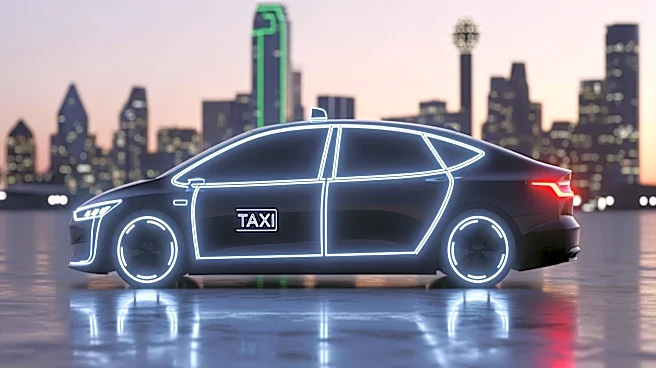
Tesla plans to begin preparations for its first large-scale Optimus robot factory in the second quarter, signaling a commitment to its AI and robotics vision. The company is also expanding its robotaxi service in Texas, with limited access currently available in Austin, Dallas, and Houston. As Tesla navigates these developments, stakeholders will be monitoring its ability to scale production and deliver on its ambitious promises. The company's future success will depend on overcoming competition, regulatory hurdles, and consumer acceptance of new technologies.