



What's Happening?
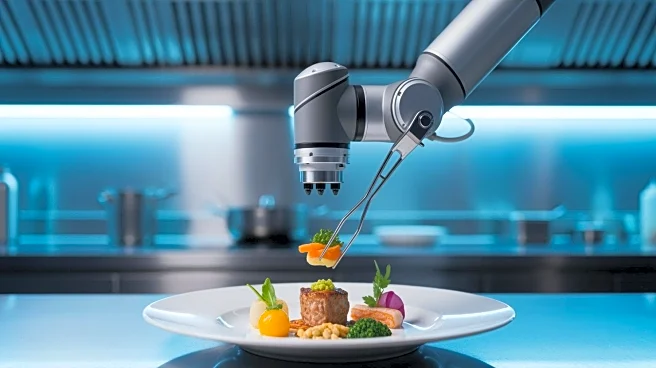
Chef Robotics Inc. has launched Chef+, its most advanced meal-assembly robot designed to improve efficiency in the food manufacturing industry. The robot offers double the ingredient capacity, a reduced footprint, and enhanced food safety features. It is engineered to address operational constraints such as limited production space and frequent ingredient refills. Chef+ includes advanced features like a three-camera vision system and AI-powered computer vision software to optimize ingredient placement and tray handling. The robot is now available to food manufacturers in the U.S., Canada, and the U.K.
Why It's Important?
The introduction of Chef+ represents a significant advancement in food manufacturing technology, offering solutions to common industry challenges
such as labor shortages and production inefficiencies. By automating repetitive tasks, the robot reduces labor costs and increases productivity, allowing workers to focus on higher-value tasks. The enhanced food safety features help manufacturers meet stringent standards, reducing the risk of contamination. This innovation could lead to broader adoption of robotics in food production, potentially transforming the industry and setting new standards for efficiency and safety.
What's Next?
As Chef+ becomes widely available, food manufacturers may begin integrating this technology into their production lines to improve efficiency and reduce costs. The success of Chef+ could encourage further investment in robotics and AI within the food industry, leading to more innovations and advancements. Additionally, the adoption of such technology may prompt regulatory bodies to update food safety standards to accommodate new manufacturing processes. The impact on labor markets could also be significant, with a potential shift in workforce needs towards more technical and supervisory roles.
Beyond the Headlines
The deployment of advanced robotics like Chef+ raises questions about the future of work in the food manufacturing industry. While automation can lead to job displacement, it also creates opportunities for new roles in robot maintenance and programming. The ethical considerations of replacing human labor with machines must be balanced with the benefits of increased efficiency and safety. As the industry evolves, there will be a need for policies that support workforce transition and training to ensure that workers can adapt to new technological demands.