








What's Happening?
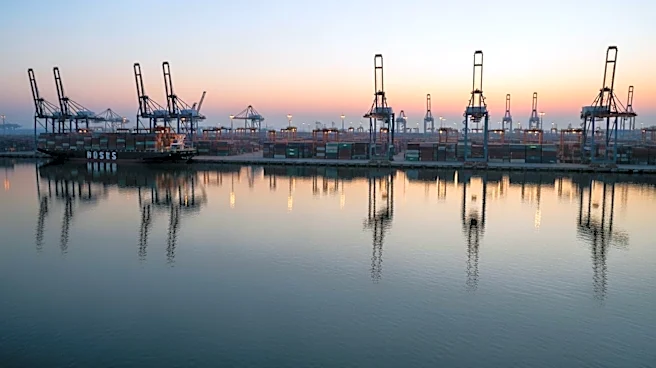
The Los Angeles Board of Harbor Commissioners has approved a $3.4 billion budget for the Port of Los Angeles for the fiscal year 2026/27. This budget represents a 25% increase from the previous year, primarily due to a significant boost in capital improvement
spending, which is up by 31%. The budget aims to address a predicted slight decrease in cargo demand, with expectations of handling 9.3 million container units, a 7% reduction from the current forecast. The budget includes $826 million in operating revenues, with shipping services contributing 65% of this amount. Key projects include the $154 million Avalon Pedestrian Bridge and Promenade Gateway, a $74 million rail expansion, and a $130 million interchange reconfiguration. These initiatives are part of a broader strategy to modernize container terminals, enhance public-access infrastructure, and improve transportation.
Why It's Important?
The approval of this budget is crucial for maintaining the Port of Los Angeles as North America's leading trade gateway. The port plays a significant role in the U.S. economy, generating $301 billion in trade in 2025 and supporting one in nine jobs across several Southern California counties. The increased investment in infrastructure and sustainability projects is expected to bolster the port's capacity to handle trade efficiently, even amid global trade volatility and policy uncertainties. The focus on sustainability and technology programs aligns with broader environmental goals and could set a precedent for other ports. The budget's emphasis on community investment and workforce development further underscores its potential to drive economic growth and job creation in the region.
What's Next?
The port's strategic initiatives will likely continue to evolve as global trade dynamics shift. The completion of major infrastructure projects, such as the Avalon Pedestrian Bridge and rail expansions, will be pivotal in enhancing the port's operational efficiency. Stakeholders, including local businesses and government entities, will be closely monitoring the impact of these investments on trade volumes and regional employment. Additionally, the port's commitment to sustainability may lead to further policy developments and collaborations aimed at reducing environmental impact. As the port navigates these changes, its ability to adapt to economic and environmental challenges will be critical in maintaining its leadership position.