





What's Happening?
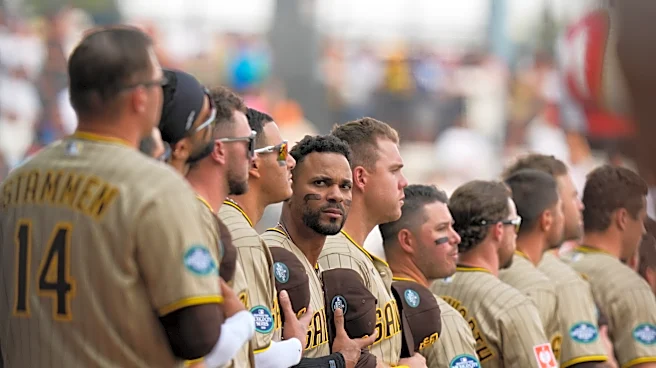
The family of the late former San Diego Padres owner, Peter Seidler, has announced an agreement to sell the franchise to a group led by Kwanza Jones and José E. Feliciano. The sale is valued at a record $3.9 billion, surpassing the previous record set
by the New York Mets' sale in 2020. The deal is currently pending approval from Major League Baseball (MLB). If approved, Jones and Feliciano will own 40% of the Padres, while the Seidler family will retain a minority stake. The new ownership group has expressed a commitment to maintaining the team's community ties and pursuing a World Series title for San Diego.
Why It's Important?
This sale represents the largest transaction in MLB history, highlighting the increasing financial valuations of sports franchises. The involvement of Jones and Feliciano, who have existing ties to the sports world, suggests a strategic vision for the Padres that could enhance the team's competitive standing and community engagement. The sale could also influence the market dynamics for other MLB teams, potentially setting a new benchmark for franchise valuations. For the city of San Diego, this transition promises continued investment in the team and its role as a community unifier.
What's Next?
The sale awaits MLB's approval, a process that will involve scrutiny of the financial and operational plans of the new ownership group. If approved, Jones and Feliciano will likely begin implementing their vision for the team, which includes community investment and efforts to secure a World Series championship. The transition may also prompt reactions from other MLB teams and stakeholders, particularly regarding the implications for franchise valuations and ownership structures.
Beyond the Headlines
The sale underscores broader trends in sports franchise ownership, where diverse investment groups are increasingly common. This shift could lead to more innovative management approaches and community-focused initiatives. Additionally, the Padres' sale may inspire other teams to explore similar ownership transitions, potentially reshaping the landscape of professional sports in the U.S.