






What's Happening?
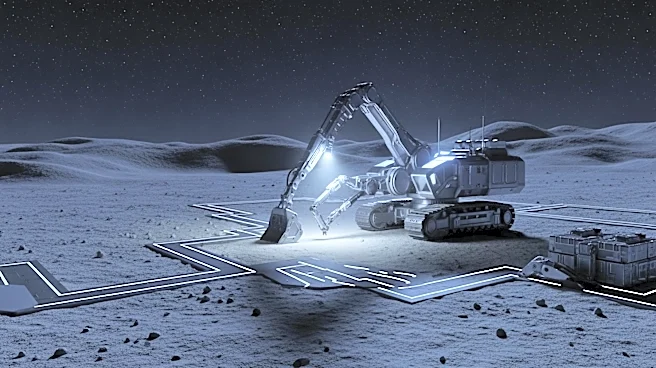
Astroport Space Technologies and Vermeer Corporation have announced a collaboration to adapt industrial surface mining equipment for autonomous lunar construction. This partnership aims to develop the heavy machinery, termed 'Lunar Iron,' necessary for building
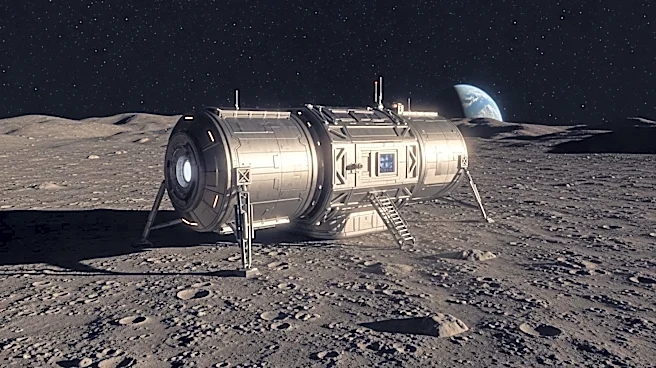
a permanent human presence on the Moon. The announcement was made at the 20th International Conference on Engineering, Science, Construction and Operations in Challenging Environments in College Station, Texas. The collaboration focuses on 'lunarisation' of Vermeer’s surface mining machinery using Astroport’s Universal Tool Implement Payload Adapter (UTIPA), a modular system designed for robotic construction in the Moon’s extreme environment. The equipment will be adapted to function in the Moon’s low gravity, extreme temperature swings, and abrasive regolith. The partnership aligns with NASA’s Moon Base program, which aims to construct lunar infrastructure by 2030.
Why It's Important?
This collaboration is significant as it addresses the engineering challenges of constructing a permanent lunar base, a key component of NASA's Moon Base program. The development of autonomous machinery capable of operating in the Moon's harsh conditions is crucial for establishing a sustainable human presence. The partnership between Astroport and Vermeer leverages existing industrial machinery, potentially reducing costs and increasing efficiency by adapting proven Earth-based technologies for lunar use. This initiative supports the U.S. government's commitment to a permanent lunar presence and could position these companies as leaders in the emerging space construction industry. Successful development and deployment of this technology could lead to significant contracts and advancements in space exploration and habitation.
What's Next?
Prototype testing will take place at Vermeer’s headquarters in Pella, Iowa, focusing on adapting high-torque cutting and trenching technologies for the lunar surface. The collaboration will initially target adapting Vermeer’s technologies for continuous operation in the Moon’s demanding conditions. The partnership is part of a broader effort to develop a lunar construction ecosystem, with other companies like Blue Origin and SpaceX also working on related projects. The success of this initiative could lead to further collaborations and advancements in lunar construction technology, potentially accelerating the timeline for establishing a permanent human presence on the Moon.
Beyond the Headlines
The development of autonomous lunar construction machinery has broader implications for the future of space exploration and industry. It represents a step towards the commercialization of space, with potential applications beyond the Moon, such as Mars and other celestial bodies. The ability to construct infrastructure in space could lead to new opportunities in mining, energy production, and scientific research. Additionally, the collaboration highlights the growing importance of public-private partnerships in advancing space technology and exploration. The success of this project could set a precedent for future collaborations and innovations in the space industry.