
What's Happening?
Dwayne Johnson, also known as The Rock, was pulled over by police in Hollywood on April 30, 2026, following a high-profile event. The incident occurred after Johnson attended a Hollywood Walk of Fame ceremony
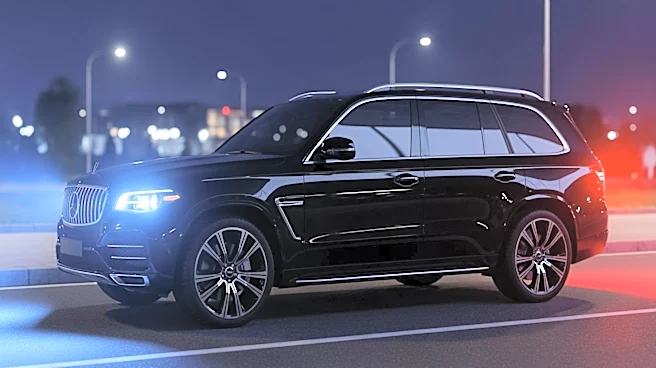
honoring Emily Blunt and Stanley Tucci, where he delivered a speech praising Blunt. According to reports, the police stopped Johnson due to the tinted windows on his vehicle, which is a minor violation under California law. Johnson reportedly handled the situation calmly, cooperating with the officer and receiving a ticket typically associated with a fix-it order for such violations. The event was captured on video and released by TMZ, showing Johnson maintaining a composed demeanor throughout the interaction.
Why It's Important?
This incident highlights the reality that even high-profile celebrities like Dwayne Johnson are subject to everyday legal regulations, such as vehicle compliance laws. The event underscores the importance of adhering to local laws, regardless of one's status. For the public, it serves as a reminder of the legal standards that apply universally. For Johnson, the incident was a minor inconvenience but also an opportunity to demonstrate composure and cooperation with law enforcement, potentially reinforcing his public image as a respectful and law-abiding citizen. The media coverage of such events can influence public perceptions of celebrities and their interactions with the law.
What's Next?
While the incident itself is minor, it may prompt discussions about vehicle compliance laws and their enforcement, especially concerning tinted windows, which are a common issue in California. For Johnson, the next steps involve addressing the ticket, likely through a fix-it order, which requires correcting the violation and providing proof to the authorities. The incident is unlikely to have any significant long-term impact on Johnson's career or public image, given his cooperative response. However, it may serve as a talking point in media discussions about celebrity interactions with law enforcement.