








What's Happening?
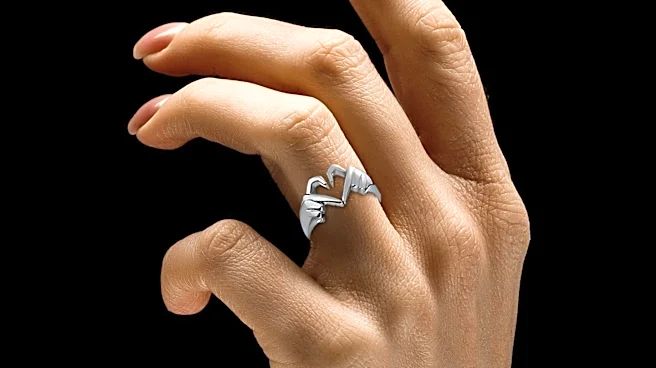
The Oura ring, a sleek smart ring designed to track various health metrics, has become a global wellness phenomenon. Initially developed in Finland in 2013 by tech entrepreneurs from companies like Nokia and Polar, the ring aims to monitor the human body
unobtrusively, focusing on sleep quality and recovery. The ring tracks sleep, heart rate, body temperature, and more, offering users personalized insights through a 'Readiness Score.' Its popularity has surged among celebrities and influencers, including Prince Harry and Kim Kardashian. The ring's subtle design, lacking screens or alerts, has positioned it as both a lifestyle accessory and a health tool. While initially appealing to male tech enthusiasts, its user base has expanded significantly among young women, particularly Gen Z, due to features that track menstrual cycles and other women's health metrics. Despite its success, the Oura ring faces criticism over its cost, ranging from $349 to $499, and privacy concerns, as it collaborates with health and government organizations in the U.S.
Why It's Important?
The Oura ring's rise highlights a growing trend in health-conscious consumerism, where technology meets personal wellness. Its success underscores a shift towards more personalized health monitoring tools that integrate seamlessly into daily life. However, the ring's high cost and subscription model may limit accessibility, raising questions about the democratization of health technology. Privacy concerns are also significant, as the intimate nature of the data collected—such as sleep patterns and menstrual cycles—poses potential risks if mishandled. The ring's popularity among women suggests a broader market shift towards female-focused health technology, which could drive innovation and competition in the sector. However, the psychological impact of constant self-monitoring, such as anxiety over sleep quality, highlights the need for balanced use of such technologies.
What's Next?
As the smart ring market grows, with competitors like Samsung entering the space, Oura will likely face increased competition. The company may need to address privacy concerns more transparently to maintain consumer trust. Additionally, as the market expands, there could be a push for more affordable options, making health technology accessible to a broader audience. The psychological effects of self-monitoring may also prompt further research and development of features that promote mental well-being alongside physical health. The ongoing evolution of wearable health technology will likely continue to shape consumer expectations and industry standards.
Beyond the Headlines
The Oura ring's success reflects broader cultural shifts towards self-optimization and the quantification of personal health. This trend raises ethical questions about the extent to which individuals should rely on technology for health insights and the potential for data misuse. The ring's integration into daily life without overt notifications suggests a future where technology becomes increasingly invisible yet influential. As more consumers adopt such devices, societal norms around privacy, data security, and personal health responsibility may evolve, prompting discussions about the role of technology in shaping human behavior and health outcomes.