



What's Happening?
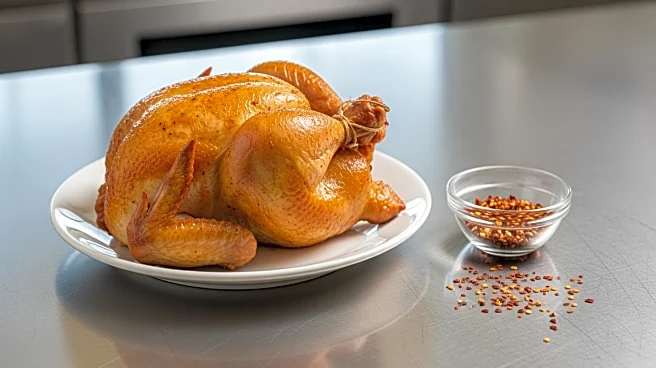
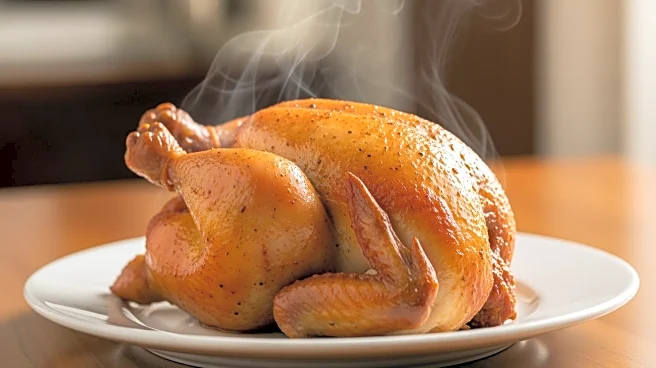
Costco is currently facing two class-action lawsuits concerning its popular Kirkland Signature Seasoned Rotisserie Chicken. The first lawsuit, filed in California, accuses Costco of falsely advertising the chicken as preservative-free, despite containing additives like carrageenan and sodium phosphate. These substances are used to maintain moisture and texture, and are approved by food safety authorities. In response, Costco has removed the preservative-free labels from its stores and online platforms. The second lawsuit, filed in Seattle, alleges that Costco's Fremont, Nebraska plant has a 'systematic' salmonella contamination issue. This lawsuit seeks damages for customers who purchased the rotisserie chicken or raw chicken parts since 2019.
A study by Farm Forward indicated that Costco's Lincoln Premium Poultry facility frequently fails USDA safety standards, with significant portions of chicken testing positive for salmonella.
Why It's Important?
These lawsuits highlight significant concerns regarding food safety and advertising practices in the retail industry. For Costco, a company known for its customer loyalty and competitive pricing, these legal challenges could impact its reputation and consumer trust. The allegations of false advertising and food safety violations could lead to increased scrutiny from regulatory bodies and potentially result in financial penalties or changes in operational practices. For consumers, these cases underscore the importance of transparency and safety in food products, potentially influencing purchasing decisions and prompting calls for stricter regulations and oversight in the food industry.
What's Next?
As the lawsuits progress, Costco may face increased pressure to address the allegations and ensure compliance with food safety standards. The outcomes of these cases could set precedents for how food safety and advertising claims are handled in the retail sector. Additionally, regulatory agencies like the USDA may intensify inspections and enforcement actions to ensure compliance with safety standards. Consumer advocacy groups may also become more vocal, demanding greater transparency and accountability from food producers and retailers.