



What's Happening?
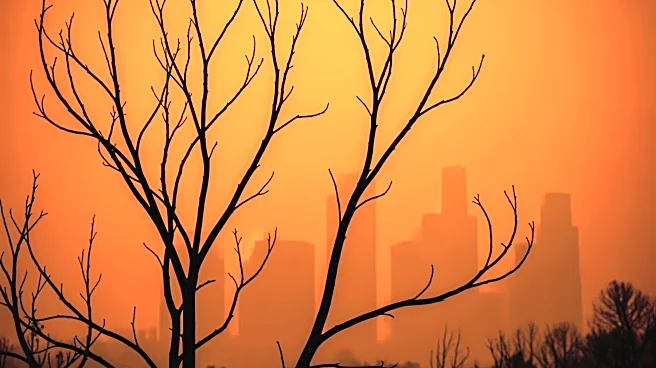
The Los Angeles fires in 2025 have significantly contributed to global insured disaster losses, which have surpassed $100 billion for the sixth consecutive year. According to Swiss Re Institute, the fires in Pacific Palisades and Altadena resulted in $40 billion in insured losses, marking them as the costliest wildfire event globally. Despite the absence of hurricanes making landfall in the U.S. this year, severe weather events, including thunderstorms and tornadoes, have added to the financial toll. The U.S., as the largest insurance market, accounted for $89 billion of the insured losses. The total economic losses from global catastrophes reached $220 billion in 2025, highlighting the ongoing impact of climate change on weather-related disasters.
Why It's Important?
The substantial financial losses from the Los Angeles fires and other natural disasters underscore the increasing impact of climate change on global economies. The insurance industry faces significant challenges in managing the financial risks associated with more frequent and severe weather events. The situation highlights the need for increased investment in resilience and adaptation strategies to mitigate future losses. The economic implications extend beyond the insurance sector, affecting property values, infrastructure, and community resilience. As climate change continues to drive extreme weather, the financial burden on insurers and affected communities is likely to grow, necessitating coordinated efforts to address these challenges.
What's Next?
In response to the ongoing financial impact of natural disasters, the insurance industry may need to reassess risk management strategies and pricing models. Policymakers and communities will need to prioritize investments in infrastructure resilience and climate adaptation to reduce future risks. The situation may also prompt discussions on regulatory frameworks and public-private partnerships to enhance disaster preparedness and response. As climate change continues to influence weather patterns, stakeholders will need to collaborate on innovative solutions to protect communities and economies from the escalating costs of natural disasters.