




What's Happening?
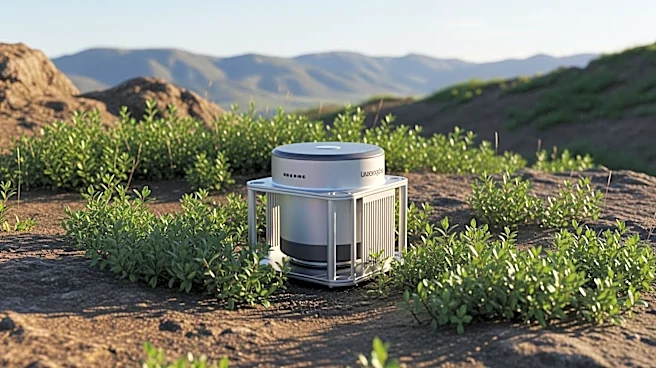
Polaris Seismic International, a Canadian seismic company, has integrated STRYDE's ultra-lightweight, low-cost nodal seismic data acquisition systems into its operations. This technology allows for high-density seismic data collection with fewer personnel,
reduced timelines, and lower costs compared to traditional methods. STRYDE's systems are designed for efficient deployment in remote and challenging environments, minimizing health, safety, security, and environmental risks. Polaris, founded in 1996, has completed over 1,200 projects globally, emphasizing community engagement and technical excellence. The adoption of STRYDE's technology marks a significant shift towards more sustainable and community-friendly seismic exploration.
Why It's Important?
The integration of STRYDE's technology by Polaris represents a significant advancement in seismic exploration, offering a more sustainable and cost-effective approach. This development is crucial for the energy sector, as it allows for more efficient resource exploration while minimizing environmental impact. The technology's ability to operate in remote areas with minimal infrastructure requirements can lead to increased exploration opportunities in previously inaccessible regions. Additionally, Polaris's commitment to community engagement ensures that local populations benefit from these projects, potentially leading to improved local economies and infrastructure.
What's Next?
Polaris plans to continue expanding its operations using STRYDE's technology, potentially entering new markets such as mineral exploration and shallow subsurface imaging. The company aims to maintain its focus on community engagement and sustainable practices, ensuring that local communities benefit from its projects. As the technology becomes more widely adopted, it could lead to broader industry shifts towards more sustainable exploration practices, influencing other companies to adopt similar technologies and approaches.
Beyond the Headlines
The adoption of STRYDE's technology by Polaris highlights the growing importance of sustainability in the energy sector. As environmental concerns continue to rise, companies are increasingly seeking ways to reduce their ecological footprint while maintaining operational efficiency. This shift towards sustainable practices could lead to long-term changes in industry standards, encouraging more companies to prioritize environmental and community considerations in their operations.