







What's Happening?
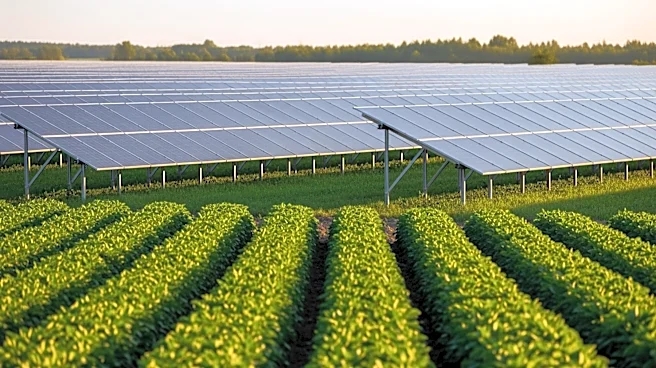
Chaberton Energy, a public benefit corporation focused on community-scale energy projects, is inviting Maryland farmers to participate in two agrivoltaics projects in Montgomery County. These projects, Chaberton Solar Sugarloaf and Chaberton Solar Ramiere,
aim to integrate solar power generation with agricultural activities. The initiative offers farmers access to land at no cost and compensation for managing vegetation. Chaberton is collaborating with Okovate Sustainable Energy to evaluate proposals from farmers interested in using the land for crop farming or animal grazing. The projects are designed to provide lower-cost energy to nearly 1,000 local households while supporting agricultural businesses. This effort aligns with Maryland's goals for renewable energy and agricultural sustainability.
Why It's Important?
The integration of solar power with agriculture, known as agrivoltaics, represents a significant step towards sustainable energy solutions. By co-locating solar facilities with farming activities, Chaberton Energy is addressing the dual challenges of energy production and agricultural land use. This approach not only helps reduce electricity costs for local communities but also supports local farmers by providing them with land access and additional income opportunities. As Maryland imports a significant portion of its electricity, these projects could enhance energy independence and stability. The initiative also reflects a broader trend towards renewable energy adoption, which is crucial for reducing carbon emissions and combating climate change.
What's Next?
Farmers interested in participating in the agrivoltaics projects must submit proposals detailing their plans for utilizing the sites. These proposals will be reviewed by Chaberton Energy and Okovate Sustainable Energy, with selected farmers expected to develop tailored farming plans. The projects will require approval from the Montgomery County Office of Agriculture. As these projects progress, they could serve as a model for similar initiatives across the U.S., promoting the integration of renewable energy with traditional agricultural practices. The success of these projects could encourage further investment in agrivoltaics, potentially leading to more widespread adoption of this innovative approach.