



What's Happening?
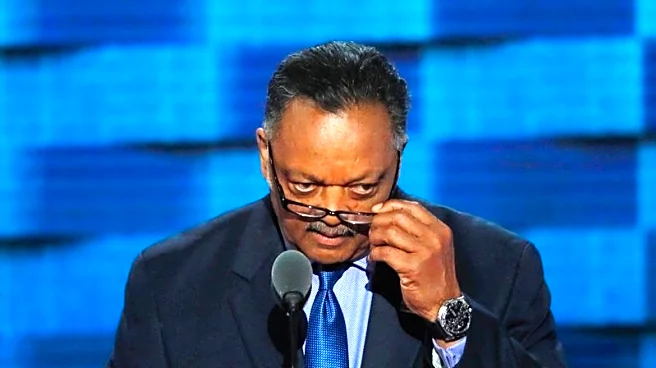
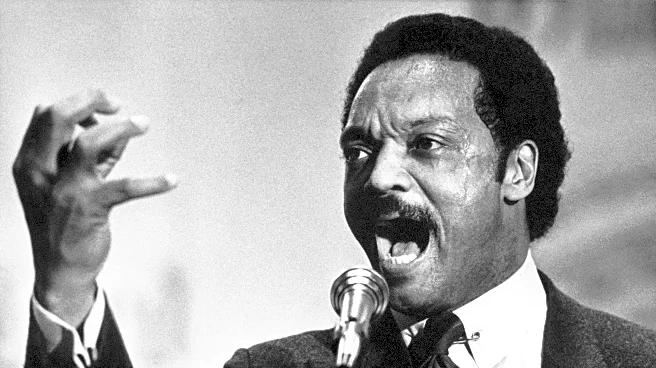
In 1994, civil rights leader Rev. Jesse Jackson launched a campaign against Hollywood, accusing the industry of institutional racism and a lack of diversity in representation. Jackson formed the Rainbow Coalition on Fairness in the Media to address these issues, threatening boycotts against projects that excluded minorities. Despite his efforts, the campaign struggled to gain momentum, with limited support from Black actors and creators in Hollywood. By 1997, the initiative had largely fizzled out as Jackson shifted focus to other political concerns. The campaign was initially sparked by the cancellation of several Black-oriented shows on Fox, which Jackson saw as indicative of broader systemic issues in the industry.
Why It's Important?
Jackson's campaign highlights
the ongoing challenges of achieving diversity and representation in the entertainment industry. Despite the lack of immediate success, his efforts brought attention to the issue and set the stage for future advocacy. The campaign underscores the difficulties faced by civil rights leaders in effecting change within entrenched industries and the need for sustained, collective action. The limited results of Jackson's initiative reflect broader societal challenges in addressing racial inequality and the complexities of balancing multiple social justice priorities.
Beyond the Headlines
The campaign's failure to achieve significant change in Hollywood diversity points to the broader issue of tokenism and the need for systemic reform. Jackson's efforts also illustrate the intersection of entertainment and politics, as his campaign was influenced by concurrent political developments, such as affirmative action debates. The initiative's legacy is a reminder of the importance of coalition-building and the potential for media to serve as a platform for social change, even when immediate results are not achieved.