
What's Happening?
The gas turbine industry in the United States is currently experiencing significant supply chain challenges, with backlogs extending years into the future. This situation is causing utilities to scramble
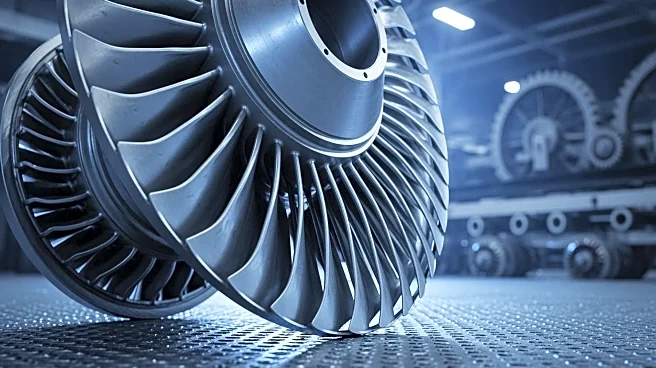
for dispatchable capacity. According to experts from the Electric Power Research Institute (EPRI), the primary bottlenecks are rotor forgings and hot-section blades, which are constrained by limited suppliers and complex manufacturing processes. Some large frame turbines have been shipped without these components, with installation occurring later to maintain construction schedules. The delays have led to an increased emphasis on component re-use and repair programs. The demand for gas turbines is driven by multiple factors, including the needs of data centers, limited dispatchable power options, and long-term electricity growth from electrification. Utilities are exploring options such as extending the life of existing assets, repowering projects, and implementing turbine uprates to meet capacity needs by 2028.
Why It's Important?
The supply chain bottlenecks in the gas turbine industry have significant implications for the U.S. power generation sector. As utilities face challenges in securing necessary components, there is a growing interest in diversifying generation portfolios to manage risks related to supply chains and fuel costs. This situation may accelerate the transition towards a more resilient power generation fleet, incorporating advanced nuclear and long-duration energy storage solutions. The competition for small- and mid-sized turbines, particularly from data centers, highlights the need for flexible and rapid deployment solutions. The ongoing challenges could reshape the generation mix for 2030 and beyond, potentially leading to a more diversified and sustainable energy landscape.
What's Next?
Utilities are likely to continue exploring alternative solutions to address the capacity shortfalls caused by the turbine supply chain issues. This includes pursuing repowering projects, implementing advanced modifications, and integrating renewables with battery storage. The industry may also see new market entrants as companies like Doosan Enerbility enter the North American market. The prolonged unavailability of turbines could lead to a shift in market dynamics, with established players like GE Vernova, Mitsubishi Power, and Siemens Energy facing increased competition. The focus on expanding factory capacity and onboarding new vendors will be crucial in addressing the backlog and ensuring a stable power generation future.