







What's Happening?
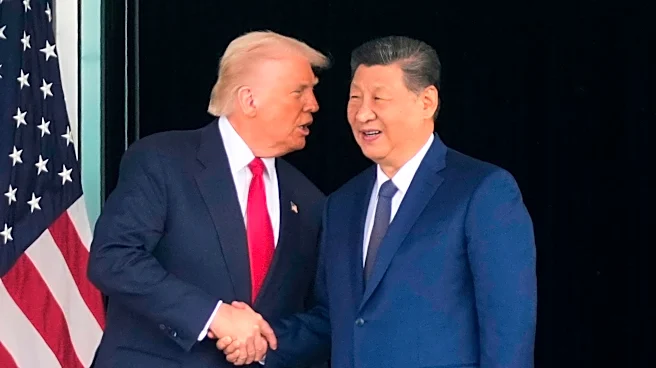
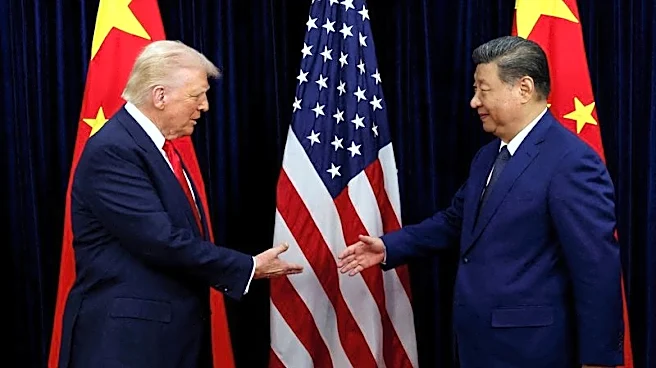
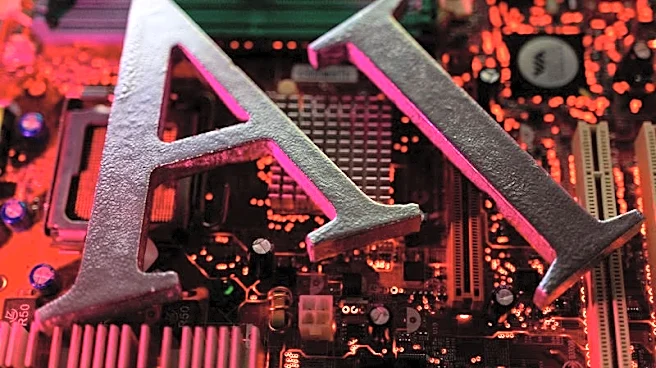
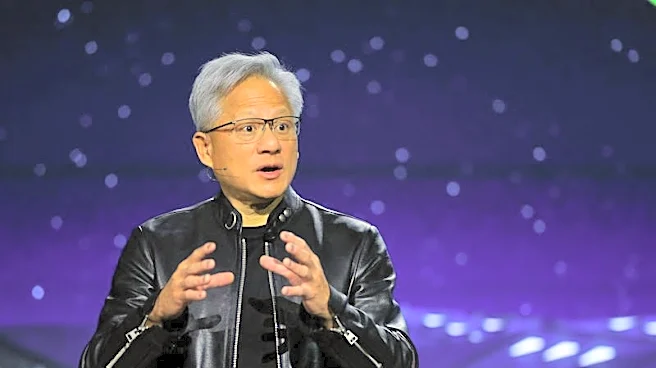
Nvidia CEO Jensen Huang will not be part of President Trump's delegation to China, which includes over a dozen U.S. executives. This visit is significant as it involves discussions with Chinese President Xi Jinping. Nvidia, a major player in AI chip manufacturing,
has faced U.S. restrictions on selling its advanced chips to China over the past four years. These restrictions have impacted Nvidia's sales in China, a market that previously contributed significantly to its data center revenue. Despite Huang's previous visits to China to maintain business ties, his exclusion from the delegation suggests that Nvidia's sales in China are unlikely to recover soon.
Why It's Important?
The exclusion of Nvidia's CEO from the delegation highlights the ongoing technological decoupling between the U.S. and China, particularly in the AI sector. This development is crucial as it underscores the impact of U.S. export controls on American tech companies' ability to operate in China. For Nvidia, the inability to sell its advanced chips in China could lead to a loss of market share and revenue. More broadly, this situation reflects the geopolitical tensions affecting global tech supply chains and the strategic importance of AI technology in international relations.
What's Next?
The U.S. government's stance on restricting AI chip sales to China is likely to continue, potentially prompting Nvidia and other tech companies to seek alternative markets or adjust their business strategies. The outcome of President Trump's visit to China and any agreements reached could influence future trade policies and tech collaborations between the two countries. Additionally, the ongoing decoupling may encourage China to accelerate its development of domestic AI technologies to reduce reliance on U.S. imports.