



What's Happening?
AgZen, a startup specializing in precision agriculture technology, has successfully raised $10 million in a Series B funding round led by DCVC Bio, with additional investments from Material Impact, Syngenta Group Ventures, and Astanor. The funding is aimed
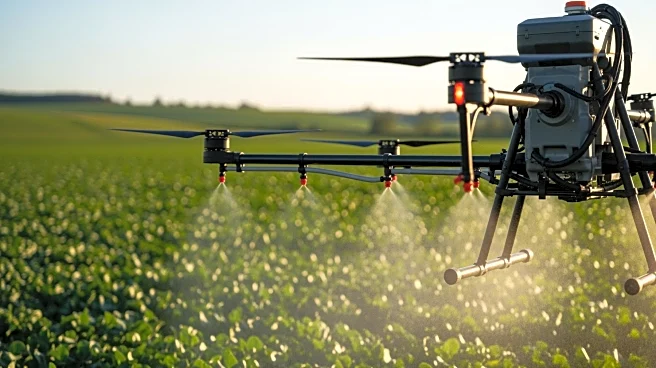
at expanding AgZen's RealCoverage system, which provides farmers with real-time visibility and control over the application of chemical inputs on crops. This system allows for significant reductions in chemical usage—between 30% to 50%—without compromising crop yield. AgZen's technology, which has already been adopted across one million commercial acres in the U.S., is set to expand to over two million acres globally by 2026. The RealCoverage system uses advanced cameras and AI to optimize spraying techniques, offering actionable insights to farmers in real-time.
Why It's Important?
The development and expansion of AgZen's technology are significant for the agricultural industry, particularly in the context of increasing environmental concerns and the need for sustainable farming practices. By reducing chemical inputs, AgZen's system not only helps in lowering costs for farmers but also minimizes the environmental impact of farming. This technology could lead to a paradigm shift in how crop protection products are used, potentially influencing equipment design and performance metrics across the industry. The investment from major players like Syngenta Group Ventures underscores the potential of AgZen's technology to transform agricultural practices, making them more efficient and environmentally friendly.
What's Next?
With the new funding, AgZen plans to accelerate the deployment of its RealCoverage system and further develop its EnhanceCoverage product, which is expected to be commercially available by 2027. This product aims to improve the adhesion of chemical droplets to plants, allowing for even greater reductions in chemical use. The company is also focusing on expanding its market reach, with commitments already in place for significant acreage in the U.S., Australia, and Argentina. As the technology continues to gain traction, it is likely to attract more interest from crop protection companies and original equipment manufacturers (OEMs), potentially leading to new partnerships and collaborations.