
What's Happening?
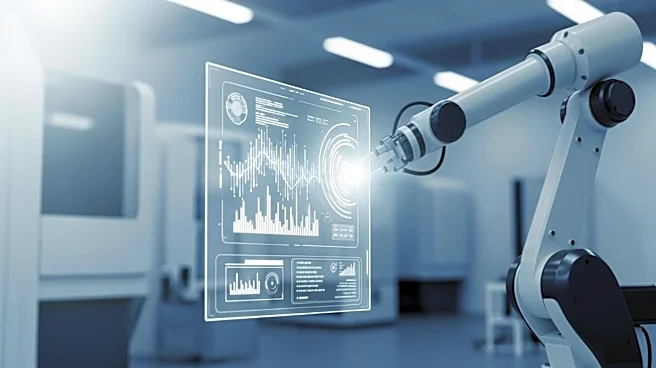
Industrial environments are experiencing a significant transformation due to the Industrial Internet of Things (IIoT). This shift is characterized by the integration of connected sensors, edge devices,
and intelligent control systems that facilitate real-time data exchange. By 2025, the number of industrial IoT devices is expected to exceed 152 million globally, with the market projected to grow from $194.4 billion in 2024 to $286.3 billion by 2029. However, this rapid expansion also brings increased security risks, with over 50% of IoT devices having critical vulnerabilities. Traditional access control systems, which were primarily designed for physical entry regulation, are evolving into intelligent, connected security layers within IIoT ecosystems. This integration allows access control systems to interact with industrial sensors, edge computing devices, and cloud-based analytics platforms, transforming them into dynamic decision-making systems.
Why It's Important?
The integration of access control systems with IIoT is crucial for enhancing security in industrial environments. As IoT security risks rise, traditional security models are insufficient. The convergence of access control with IIoT enables real-time automation and intelligent decision-making, reducing response times and preventing incident escalation. This integration is particularly beneficial for industries such as manufacturing, energy, and logistics, which rely heavily on automation and connected infrastructure. By linking access permissions to real-time data, organizations can enhance operational safety, reduce downtime, and improve compliance with safety and regulatory standards. Furthermore, the ability to analyze workforce movement and optimize workflows through access control data contributes to increased efficiency and data-driven decision-making.
What's Next?
As industrial ecosystems continue to expand, the integration of access control with IIoT will become increasingly important. Future trends include the development of autonomous security systems powered by AI, which will automate decision-making and threat response without human intervention. The expansion of edge AI will bring more intelligence closer to devices, reducing latency and improving reliability. Additionally, the convergence of cyber and physical security strategies will address evolving threats, ensuring comprehensive protection for industrial environments. Organizations will need to adopt zero trust principles, secure communication channels, and design scalable systems to support future growth in connected devices and data volumes.