


What's Happening?
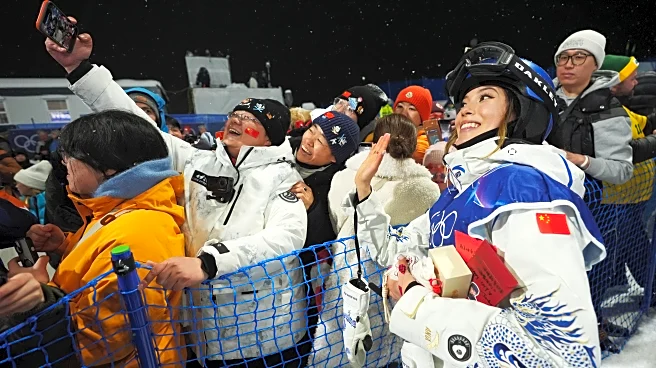
Eileen Gu, an American-born skier representing China at the Milan Cortina Winter Olympics, has become a focal point of controversy. Despite her U.S. origins, Gu chose to compete for China, which has led to significant backlash from American audiences and political figures. Vice President JD Vance expressed his hope that athletes born in the U.S. would choose to represent their home country. Gu, who has been successful in her events, feels targeted by a specific strand of American politics, attributing the criticism to broader anti-China sentiments. She has also faced personal challenges, including alleged physical assaults and threats, due to her decision.
Why It's Important?
The situation highlights the complex dynamics of national identity and global sports. Gu's
decision underscores the increasing globalization of sports, where athletes often have dual allegiances. This has sparked debates about patriotism and the role of politics in sports. The backlash against Gu also reflects broader geopolitical tensions between the U.S. and China, with her success on the international stage amplifying these issues. The financial incentives provided by China to athletes like Gu further complicate perceptions of loyalty and national representation in sports.
What's Next?
Gu is set to compete in the women's freestyle skiing halfpipe final, which could further intensify the scrutiny she faces. The ongoing criticism may prompt discussions among sports governing bodies about the rules and ethics of national representation. Additionally, political figures and the public may continue to debate the implications of athletes competing for countries other than their birth nation, especially in the context of U.S.-China relations.