



What's Happening?
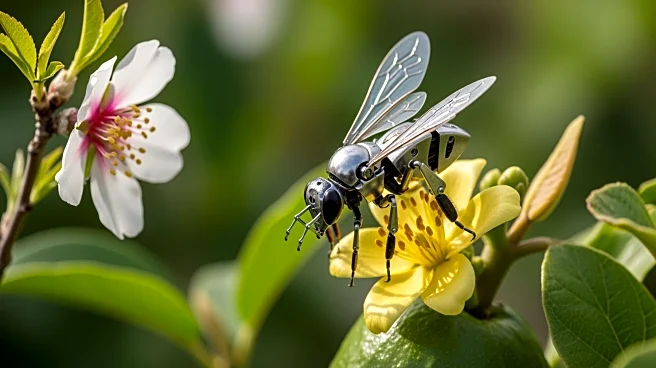
A significant challenge is emerging in agriculture, particularly affecting high-value crops like avocados, almonds, and blueberries, due to a decline in natural pollinators. The traditional reliance on honeybees for pollination is proving insufficient as these bees cannot fully replace the specialized services provided by wild bees. This issue is exacerbated by factors such as habitat loss, pesticide use, and climate change, leading to a decrease in wild bee populations. In response, agritech companies are developing innovative solutions that combine nature's principles with technology. One such approach is biomimetic technology, which replicates the physical and biological principles of natural pollinators to enhance pollination efficiency.
This method aims to complement the activity of honeybees, particularly in conditions where they are less effective, such as during early mornings or in areas with scarce natural pollinators.
Why It's Important?
The decline in natural pollinators poses a significant threat to global food production, particularly for crops that are heavily dependent on pollination. This situation could lead to lower yields, increased instability in food supply, and higher prices for consumers. By integrating technology with natural processes, the agricultural sector can mitigate these risks and ensure more stable and sustainable food production. This approach not only addresses the immediate challenges posed by the decline in pollinators but also offers a long-term solution that can adapt to changing environmental conditions. The success of these innovations could have a profound impact on food security and the agricultural economy, particularly in the United States, where a large portion of honeybee hives are used for commercial pollination.
What's Next?
The development and implementation of biomimetic pollination technologies are expected to continue, with further research and investment likely to enhance their effectiveness and scalability. As these technologies become more widely adopted, they could lead to a significant shift in agricultural practices, reducing reliance on honeybees and promoting biodiversity. Stakeholders, including farmers, agritech companies, and policymakers, will need to collaborate to support the integration of these technologies into existing agricultural systems. Additionally, there may be increased efforts to protect and restore natural habitats to support wild pollinator populations, further stabilizing the agricultural ecosystem.
Beyond the Headlines
The integration of technology in agriculture raises important ethical and environmental considerations. While biomimetic technologies offer a promising solution to the pollination crisis, it is crucial to ensure that these innovations do not disrupt existing ecosystems or harm natural pollinator communities. There is also a need to address the root causes of pollinator decline, such as habitat destruction and pesticide use, to create a more sustainable agricultural system. The success of these technologies could also influence public policy and consumer behavior, encouraging more sustainable practices and greater awareness of the importance of biodiversity in food production.