








What's Happening?
Retailers are increasingly utilizing social proof and retail psychology to enhance sales and customer confidence. Social proof, a concept rooted in psychology, involves leveraging the behavior and opinions of others to influence individual decision-making.
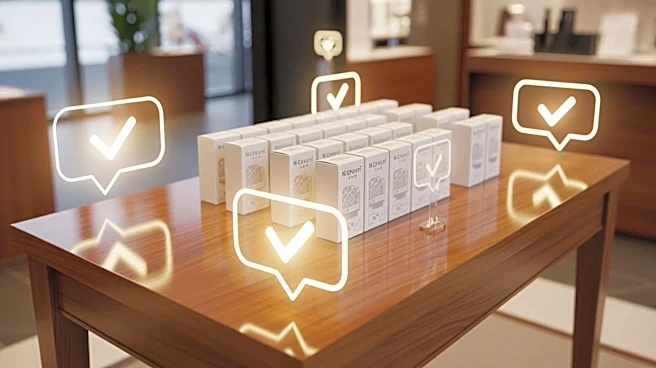
Retailers are applying this by creating visible 'busy' signals, collecting testimonials, and showcasing product reviews to attract and reassure customers. Strategies include displaying 'Most Loved' or 'Top Rated' sections, using signage to draw in foot traffic, and offering samples to create a crowd effect. These tactics aim to reduce decision fatigue and increase consumer trust by highlighting popular and well-reviewed products.
Why It's Important?
The use of social proof in retail is significant as it directly impacts consumer behavior and sales. By providing visible cues of popularity and approval, retailers can reduce consumer uncertainty and encourage purchases. This approach is particularly effective in a competitive market where consumers have numerous options and seek reassurance in their choices. For businesses, leveraging social proof can lead to increased foot traffic, higher conversion rates, and enhanced brand reputation. It also aligns with the growing trend of personalized and data-driven marketing strategies, which focus on building long-term customer relationships and loyalty.
What's Next?
Retailers are likely to continue refining their use of social proof as part of broader marketing strategies. This may involve integrating more sophisticated data analytics to personalize social proof displays and enhance customer experiences. Additionally, as consumer expectations evolve, retailers might explore new forms of social proof, such as influencer partnerships or augmented reality experiences, to further engage and reassure customers. The ongoing digital transformation in retail will also play a role, with online platforms increasingly incorporating social proof elements to mimic the in-store experience.
Beyond the Headlines
The ethical implications of using social proof in retail warrant consideration. While it can effectively drive sales, there is a risk of manipulating consumer behavior by overstating popularity or approval. Retailers must balance transparency with marketing tactics to maintain consumer trust. Additionally, the reliance on social proof highlights broader societal trends towards conformity and the influence of peer behavior, raising questions about individual decision-making autonomy in consumer culture.